Who is this product best for?
- Home and small office routing
- Business internet edge routing
- ISP customer or branch deployments

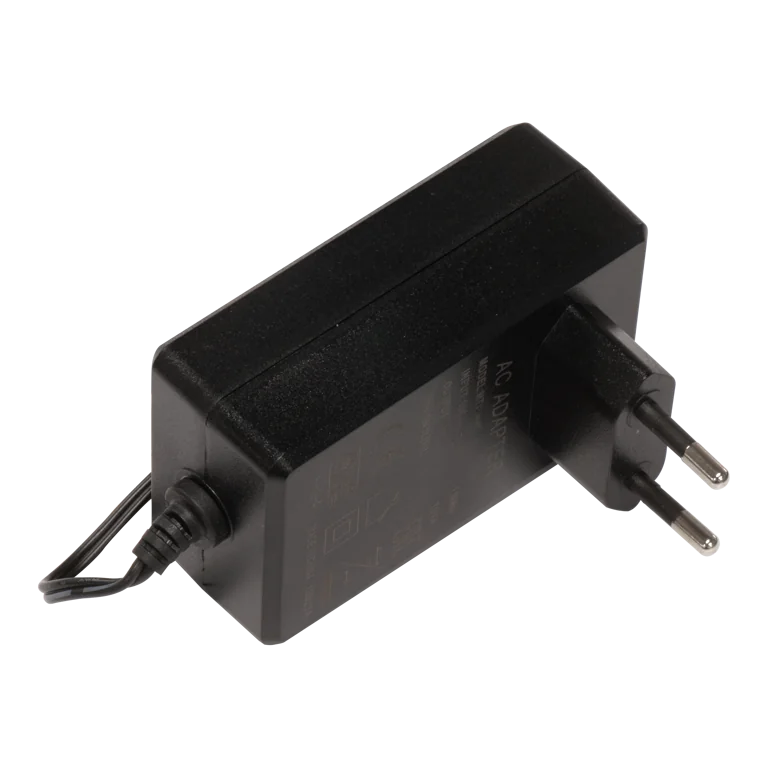
Works with compatible MikroTik RouterOS networks and standard Ethernet networking equipment. Confirm port, power and mounting requirements before purchase.
Check the product label or manufacturer datasheet for exact input voltage, PoE support and power adapter requirements.

The MikroTik MT48-570080-11DG is a specialized 57V 0.8A power supply developed for long-distance Ethernet and PoE installations. MikroTik positions it as part of its GPEN – Gigabit Passive Ethernet Network – concept, where standard Ethernet equipment, GPeR repeaters and netPower devices can be used to distribute connectivity over longer copper cable runs. (mikrotik.com)
With an output of 57V at 0.8A, the adapter provides approximately 45.6W. Its higher 57V operating voltage is particularly useful for longer PoE cable runs because it maintains a better downstream power budget than lower-voltage alternatives in MikroTik's GPEN examples.
MikroTik currently lists the MT48-570080-11DG at an official suggested price of US$12. It remains part of MikroTik's current accessories catalogue together with the 48V MT48-480095-11DG alternative. (mikrotik.com)
MikroTik officially describes the MT48-570080-11DG as a 57V, 0.8A power supply for long Ethernet cable runs and specifically states that it enables the use of multiple GPeR units. (mikrotik.com)
What Is MikroTik MT48-570080-11DG?The MT48-570080-11DG is a dedicated power source for extended Ethernet distribution systems.
A typical installation may look like:
AC mains → MT48-570080-11DG → GPEN injector → Ethernet cable → GPeR → Ethernet cable → GPeR → netPower/device
The adapter itself does not repeat Ethernet data. Instead, its purpose is to provide the electrical power that GPEN devices and compatible PoE equipment use over the Ethernet cabling.
This distinction is important because the MT48-570080-11DG has no networking interface, switching function or RouterOS configuration.
Key Features of MikroTik MT48-570080-11DGThe adapter delivers 57V DC, which is at the upper end of the voltage range supported by several MikroTik PoE and GPEN products. (mikrotik.com)
This higher voltage is useful when power must travel over long Ethernet cable runs because voltage drop becomes more significant as cable distance increases.
The power supply delivers up to 0.8A.
Its nominal output capacity is:
57V × 0.8A = 45.6W
MikroTik's official GPEN documentation identifies the MT48-570080-11DG as a 45.6W adapter.
This is not simply a replacement router adapter.
MikroTik specifically designed the MT48-570080-11DG so installers can use:
Long Ethernet cable runs
Multiple GPeR units
GPEN distribution systems
netPower equipment
Long-distance PoE applications
MikroTik currently lists GPeR IP67 Case, GPEN11, GPeR, netPower 15FR, GPEN21 and netPower Lite 7R as related products for the MT48-570080-11DG.
4. Part of MikroTik GPENGPEN stands for Gigabit Passive Ethernet Network.
MikroTik developed GPEN as an Ethernet-based distribution architecture aimed at giving ISPs a simpler alternative to some GPON-style deployments. Instead of requiring an optical network terminal at every customer site, GPEN can use Ethernet, GPeR repeaters, netPower switches and customer-side power injection.
The MT48-570080-11DG plays an important role because the power provided at the customer's end can travel along Ethernet cabling to power intermediate repeaters and downstream equipment.
5. Works with MikroTik GPeRThe MikroTik GPeR is a Gigabit Passive Ethernet Repeater designed to extend Ethernet beyond a normal cable segment.
MikroTik states that one GPeR can provide an additional less than approximately 100–150 metres to a conventional network device, while the distance between two GPeR units can reach approximately 210 metres, depending on cable quality. Multiple GPeR units can be used for much longer links. (mikrotik.com)
The GPeR accepts 24–57V PoE input, which makes the MT48-570080-11DG's 57V output particularly well suited to extended GPeR deployments. (mikrotik.com)
6. Better Long-Distance Power BudgetOne of the most important advantages of MT48-570080-11DG is visible in MikroTik's GPEN design examples.
MikroTik compares 24V, 48V and 57V sources over different cable distances. In the published examples, the 57V 0.8A supply retains more useful PoE-out power at longer distances than the 48V 0.95A option.
These are MikroTik GPEN planning examples rather than guaranteed field results. Actual power availability depends on cable resistance, cable quality, connector losses, equipment consumption and installation conditions.
7. Can Support a 500-Metre Example LinkMikroTik's GPEN guide shows a 500-metre example using three GPeR units with a 57V supply. In that scenario, netPower remains powered and approximately 3.5–7W may still be available for downstream PoE-out.
This is one area where the 57V adapter outperforms the 48V 0.95A MT48 supply in MikroTik's example calculations.
The 48V version can still power netPower at the 500-metre example distance, but MikroTik lists no remaining PoE-out budget there.
8. Suitable for Multi-Building NetworksThe MT48-570080-11DG can be useful where network cabling must travel through:
Apartment blocks
Hotels
Schools
Universities
Warehouses
Office compounds
Industrial sites
High-rise buildings
CCTV networks
WISP distribution networks
Rural internet installations
The GPeR itself is specifically promoted by MikroTik for high-rise and multi-apartment environments where conventional Ethernet cable distances can become a challenge. (mikrotik.com)
9. Useful for CCTV and Access-Point NetworksExtended Ethernet links are often required where IP cameras, wireless access points or remote switches sit several hundred metres from the main network room.
With properly designed GPEN infrastructure, the MT48-570080-11DG can supply power through multiple GPeR hops while leaving some power available at the destination.
The available PoE budget must always be calculated before selecting the final camera, access point or radio.
10. No RouterOS or Configuration RequiredThe adapter is purely electrical.
It has:
No RouterOS
No SwOS
No Ethernet port
No SFP port
No CPU
No IP address
No web interface
No firmware
No WinBox configuration
No software setup is needed.
MikroTik MT48-570080-11DG Price in KenyaThe official MikroTik suggested price is currently US$12. (mikrotik.com)
A sufficiently reliable current Kenya-specific retail price for the exact MT48-570080-11DG was not confirmed during the latest check. Local buyers should therefore request a current quotation rather than relying on a converted US-dollar figure.
Pricing InformationDetailsOfficial Suggested PriceUS$12Kenya Retail PriceRequest current quotationProduct CodeMT48-570080-11DGOutput57V 0.8ARated / Nominal Power45.6WMain ApplicationLong Ethernet and GPEN deploymentsMultiple GPeR SupportYesRecommended Buying CheckConfirm exact 57V model, warranty and local stockMT48-570080-11DG vs MT48-480095-11DGBoth MT48 adapters provide approximately 45.6W, but they use different voltage and current combinations.
The MT48-570080-11DG is particularly attractive for longer cable runs because its 57V output helps maintain a better downstream power budget.
MikroTik's GPEN guide lists all three supplies and shows the 57V 0.8A adapter retaining more destination PoE power than the 48V 0.95A model in several long-distance examples.
Why Choose MikroTik MT48-570080-11DG?The MT48-570080-11DG is especially useful where Ethernet and PoE must travel over longer distances without installing an AC-powered switch at every intermediate point.
Its main advantages include:
57V DC output
0.8A current capacity
45.6W nominal power
Optimized for long Ethernet runs
Supports multiple GPeR units
Part of MikroTik GPEN
Better long-distance power retention
Can leave usable PoE power even in MikroTik's 500m example
Useful with netPower
No configuration required
Official suggested price of US$12
It is a 57V 0.8A power supply designed for MikroTik GPEN systems, long Ethernet cable runs and installations using multiple GPeR repeaters. (mikrotik.com)
The adapter outputs 57V DC. (mikrotik.com)
It provides up to 0.8A. (mikrotik.com)
Approximately 45.6W.
This is calculated from 57V × 0.8A and is also stated in MikroTik's GPEN documentation.
MikroTik currently lists the adapter at US$12. (mikrotik.com)
A reliable exact current Kenyan retail price was not confirmed. Request a current local quotation for MT48-570080-11DG.
GPEN means Gigabit Passive Ethernet Network. MikroTik designed it as an Ethernet-based architecture for distributing internet connectivity using products such as GPEN11, GPEN21, GPeR and netPower.
GPEN requires power to travel from a customer or network endpoint through Ethernet cabling to intermediate and upstream devices. The 57V adapter provides the higher-voltage power needed for longer links.
Yes. GPeR is one of its officially related MikroTik products. (mikrotik.com)
The current GPeR supports 24–57V PoE input, including both passive PoE and 802.3af/at input. (mikrotik.com)
MikroTik specifies around 100–150 metres to a normal network device and up to approximately 210 metres between two GPeR units, depending on cable quality. (mikrotik.com)
Yes. Supporting multiple GPeR units is specifically mentioned by MikroTik as a purpose of this adapter. (mikrotik.com)
MikroTik provides a GPEN design example using three GPeR units over approximately 500 metres with a 57V supply.
No. The published values are design examples.
Cable resistance, conductor quality, connector condition, number of repeaters and equipment load all affect actual results.
In MikroTik's 57V example, approximately 3.5–7W remains available for PoE-out after three GPeR units over about 500 metres.
Approximately 10–14W in MikroTik's example with two GPeR units.
Approximately 17.5–18.5W with one GPeR in the published GPEN example.
Approximately 19.5–20.5W in MikroTik's example without an intermediate GPeR.
For MikroTik's published GPEN examples, yes. The 57V source retains more usable downstream PoE power at longer distances than the 48V 0.95A supply.
For the same power level, a higher voltage means lower current. Lower current reduces resistive losses in the cable, which becomes increasingly important over long cable runs.
No.
The 57V model provides:
57V at 0.8A
The 48V model provides:
48V at 0.95A
Both are approximately 45.6W.
No. The 48POW provides 48V at 1.46A and 70W, while this adapter provides 57V at 0.8A and 45.6W.
Yes. GPEN11 is officially listed as a related product.
MikroTik's GPEN documentation lists GPEN11 with a supported input range of 12–57V.
Yes. GPEN21 is another officially related product and supports up to 57V input.
It can be part of a GPEN topology powering netPower. MikroTik's GPEN documentation specifically illustrates netPower receiving power through customer-side GPEN connections.
No. It is the power supply.
A GPEN device, router, switch or separate PoE injector places the DC power onto the Ethernet cable.
No.
No.
No.
No.
No.
Yes, where the complete GPEN design provides sufficient Ethernet distance and PoE power for the cameras.
Potentially through compatible GPEN or PoE hardware, provided enough power remains at the destination.
Yes. MikroTik specifically identifies high-rise and multi-apartment buildings as useful applications for GPeR-based Ethernet extension. (mikrotik.com)
Yes. It can be useful where Ethernet must travel through multiple floors, wings or communication areas.
Yes, especially where classrooms or blocks are farther from the primary network cabinet than normal Ethernet distances allow.
Yes. It is highly relevant to WISP and ISP last-mile installations built around MikroTik GPEN.
No. It provides power.
Data speed depends on the Ethernet devices, cabling and link design.
Yes. The GPeR has two 10/100/1000 Ethernet ports. (mikrotik.com)
MikroTik's GPeR distance specifications refer to CAT6 Ethernet cable, with achievable distance depending on cable quality. (mikrotik.com)
Yes. Poor cable increases resistance, voltage drop and potentially data errors.
High-quality solid-copper cable is strongly preferable for long-distance PoE installations.
For long PoE runs, solid-copper cable is generally preferable because copper-clad aluminium has higher electrical resistance and can significantly reduce the power reaching distant equipment.
No.
Surge and lightning protection must be designed separately.
Yes, where suitable for the network design. Outdoor Ethernet connections should also be correctly grounded.
No. It has no battery.
Only if its AC input is supplied by a UPS, inverter, generator or other backup power source.
Yes, provided the UPS delivers suitable AC mains power.
Yes, through a properly designed inverter or regulated backup-power system.
No. A 57V supply should never be connected to a device that only accepts 24V.
Check the device's supported voltage range first.
The adapter can be sourced through MikroTik networking suppliers. When buying, specify the complete model MT48-570080-11DG and verify that the supplied unit is the 57V 0.8A version, not the visually similar 48V 0.95A model.
Installing MikroTik MT48-570080-11DGBefore installing the adapter, determine the total Ethernet distance, number of GPeR repeaters and power requirement at the far end. MikroTik's GPEN examples demonstrate that the available downstream PoE budget decreases as cable distance and the number of GPeR units increase.
Use good-quality solid-copper Ethernet cable and properly terminated connectors. MikroTik specifies up to around 100 metres between the power source/router and GPeR under normal conditions, potentially around 150 metres with high-quality cable, and up to approximately 210 metres between GPeR units depending on cable quality.
For outdoor, rooftop or inter-building installations, also include suitable surge protection, grounding and weatherproofing. The 57V adapter improves the available long-distance power budget, but it cannot compensate for poor cabling, damaged connectors or an improperly engineered PoE system.
The MikroTik MT48-570080-11DG is a specialized 57V 0.8A, 45.6W power supply designed for long Ethernet and GPEN installations. It works particularly well with MikroTik products such as GPeR, GPEN11, GPEN21 and netPower, allowing installers to distribute Ethernet and power across significantly longer copper cable runs than a normal single Ethernet segment.
Its biggest advantage over the 48V 0.95A MT48 adapter is its higher operating voltage. MikroTik's own GPEN planning examples show the 57V supply maintaining approximately 10–14W at 310 metres and 3.5–7W even in a 500-metre, three-GPeR example, giving installers more flexibility when downstream equipment also requires PoE power.
MikroTik currently lists the MT48-570080-11DG at US$12. For the latest MikroTik MT48-570080-11DG price in Kenya, GPeR repeaters, GPEN equipment, netPower switches and long-distance PoE solutions, visit Mikrotik Kenya for current pricing and availability.
Reviews are not available yet for this product.
MT48-570080-11DG is currently listed as available. Stock can change, so confirm availability before placing a large order.
The current listed price is KSh 3,500.00. Prices are generated from the product catalogue and may change when inventory is updated.
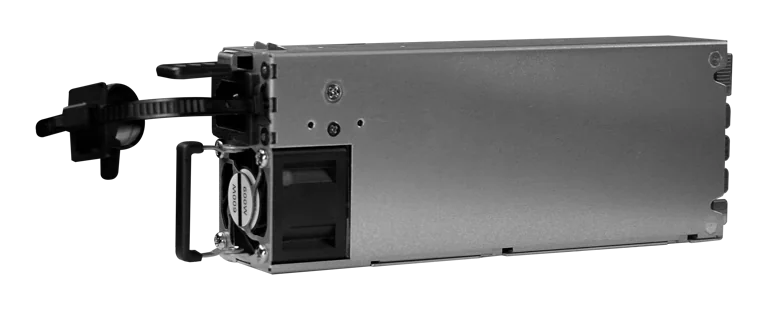
Buy MikroTik G1483-0600WNB in Kenya, a 600W hot-swappable 54.5V 10.35A power supply for the CRS320-8P-8B-4S+RM PoE++ switch, support
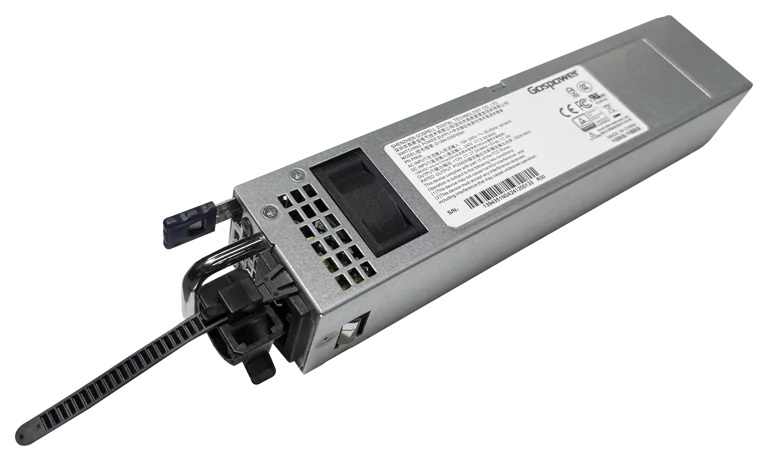
Buy MikroTik G1394-0350WNA in Kenya, a 350W hot-swappable 12V DC 27.5A AC power supply designed for the MikroTik CRS804 DDQ 400G swi
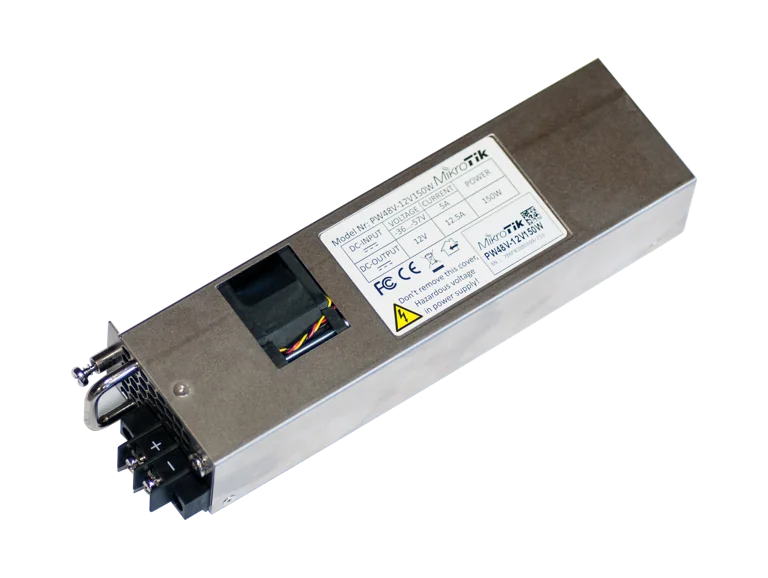
Buy MikroTik PW48V-12V150W in Kenya, a 150W hot-swappable -48V DC telecom power supply for CCR1072, CCR2216, CRS518 and CRS520 high-
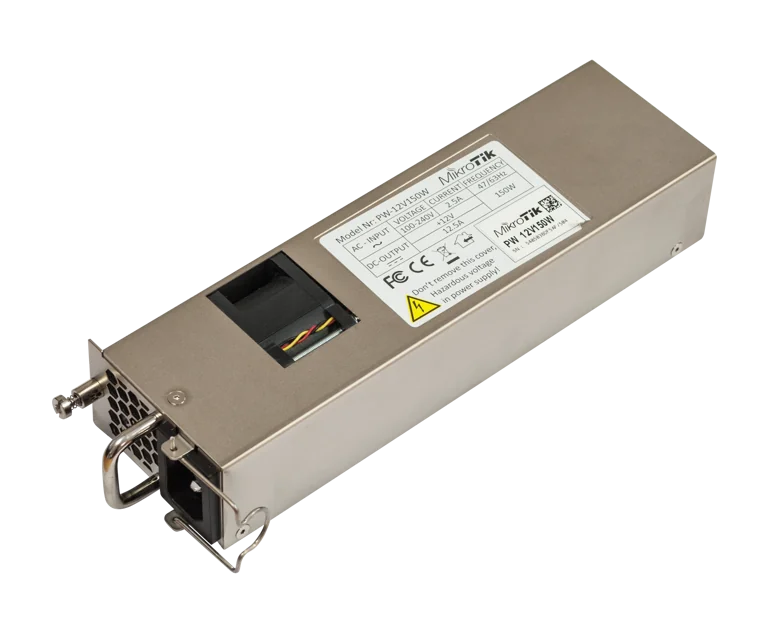
Buy MikroTik 12POW150 in Kenya, a 12V 150W hot-swap AC/DC power supply for CCR1072, CCR2216, CRS518 and CRS520 high-availability net