Who is this product best for?
- Home and small office routing
- Business internet edge routing
- ISP customer or branch deployments

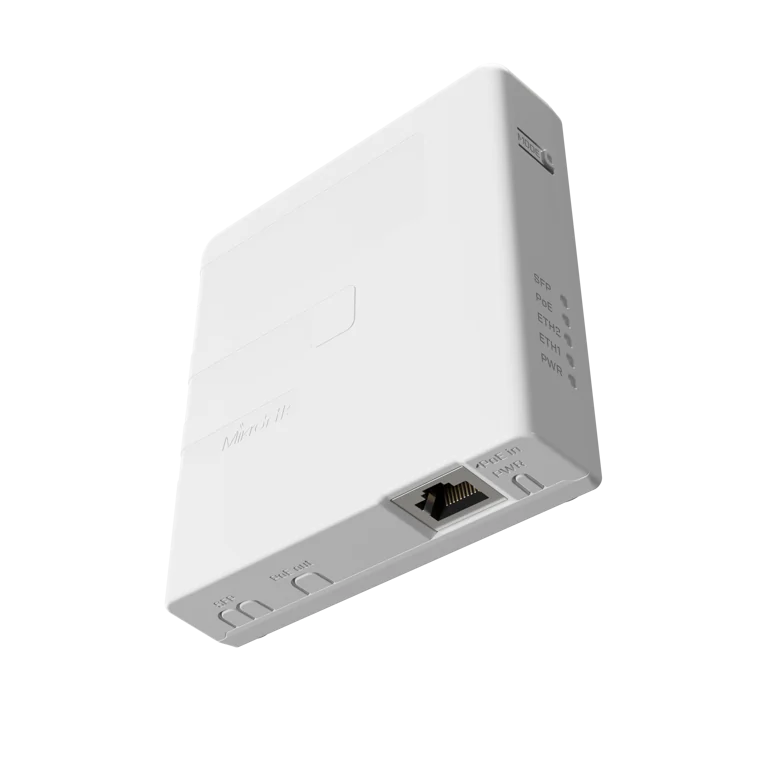
Works with compatible MikroTik RouterOS networks and standard Ethernet networking equipment. Confirm port, power and mounting requirements before purchase.
Check the product label or manufacturer datasheet for exact input voltage, PoE support and power adapter requirements.
The MikroTik GPEN21 is an advanced smart power injector and software-controlled network repeater designed for ISPs, enterprise networks, apartment internet systems, fiber deployments and professional Ethernet distribution. Unlike a conventional passive PoE injector that simply adds power to an Ethernet cable, the GPEN21 combines PoE functionality, two Gigabit Ethernet interfaces, an SFP fiber port and SwOS Lite network management in one compact device. (MikroTik)
MikroTik designed the GPEN21 as part of its Gigabit Passive Ethernet Network (GPEN) concept. It can provide PoE to an Ethernet uplink, work with devices such as MikroTik GPeR and netPower products, or use its SFP interface for fiber connectivity to an upstream network. This makes it especially useful when building cost-effective last-mile networks for apartments, offices, estates, hotels, campuses and ISP customers. (MikroTik)
The GPEN21 also provides interface monitoring, GPEN link-fault detection, VLAN functionality, SNMP reporting and traffic shaping. Current MikroTik documentation additionally lists port locking, broadcast-storm control, ingress and egress rate limiting, SFP diagnostics and ACL capabilities through SwOS Lite. (MikroTik Help)
MikroTik currently lists the GPEN21 at a suggested international price of US$40. The exact GPEN21 price in Kenya can vary according to stock availability, exchange rates, VAT and import costs, so customers should confirm the current local selling price before ordering. (MikroTik)
For genuine MikroTik networking equipment, GPEN deployment assistance, fiber connectivity solutions and professional networking support, customers can source suitable products from Mikrotik Kenya.
MikroTik GPEN21 SpecificationsSpecificationDetailsProduct ModelGPEN21Product TypeSmart PoE Injector / Managed RepeaterOperating SystemSwitchOS Lite / SwOS LiteSwitch ChipMarvell 88E6341Ethernet Ports2 × 10/100/1000 MbpsPoE-Out Ethernet Ports1Fiber Interface1 × 1G SFPPoE-In802.3af/atPassive PoE SupportYesInput Voltage12–57 VDC Inputs2: DC jack + PoE-inPoE-OutPassive PoE up to 57 VLow-Voltage PoE-Out Current Limit850 mAHigh-Voltage PoE-Out Current Limit625 mAMaximum Total PoE-Out Current850 mAMaximum Power Consumption30 WConsumption Without Attachments3 WCoolingPassiveIP RatingIP20Operating Temperature-20°C to +70°CMTBFApprox. 100,000 hours at 25°CMode ButtonYesCertificationsCE, EAC, RoHSSuggested Manufacturer PriceUS$40Included AccessoryK-62 mounting/screw kitThese specifications are based on MikroTik's current GPEN21 product page. (MikroTik)
Key Features of the MikroTik GPEN21The GPEN21 performs the basic job of a PoE injector while adding significantly more control and monitoring capabilities.
PoE FeatureBenefitPoE-InCan receive network power802.3af/at InputCompatible with standard PoE sourcesPassive PoE-OutPowers compatible upstream devicesUp to 57 V OutputFlexible network deploymentSoftware ManagementBetter visibility than basic injectorsEthernet + PowerReduces cabling requirementsMikroTik specifies Ether2 as the PoE-out port, with passive PoE output up to the voltage being supplied to the GPEN21, within its supported limits. (MikroTik)
2. Two Gigabit Ethernet PortsThe MikroTik GPEN21 includes two 10/100/1000 Ethernet interfaces.
Ethernet FeatureSpecificationNumber of Ethernet Ports2Maximum Speed1 GbpsPoE-OutEther2Managed InterfacesYesMonitoringYesVLAN SupportYesGigabit connectivity makes the GPEN21 suitable for modern broadband networks where Fast Ethernet would create an unnecessary bottleneck. (MikroTik)
3. Integrated SFP Fiber PortOne of the most important features of the GPEN21 is its 1G SFP interface, allowing fiber connectivity to be incorporated directly into the deployment. (MikroTik)
SFP FeatureBenefitSFP Ports1Maximum Interface Speed1 GbpsFiber ConnectivityYesSFP DiagnosticsSupported in SwOS LiteISP UplinkSuitableLong-Distance NetworkingDepends on SFP/fiber selectedThe actual transmission distance will depend on the SFP module, fiber type, optical wavelength and network design.
This makes the GPEN21 useful where an ISP wants to provide a fiber uplink while maintaining Ethernet connectivity inside the customer's premises.
4. SwOS Lite Network ManagementThe GPEN21 does not run RouterOS. It runs MikroTik SwOS Lite, an operating system designed specifically for the GPEN21 product family. (MikroTik Help)
SwOS Lite provides considerably more management capability than a conventional unmanaged PoE injector.
SwOS Lite FeatureFunctionInterface ManagementConfigure network portsInterface MonitoringObserve link statusSNMPCentralized network monitoringSFP DiagnosticsMonitor optical interfaceVLAN SupportNetwork segmentationVLAN FilteringControl tagged trafficTraffic LimitingControl bandwidthACLTraffic filtering/controlPort LockAccess securityStorm ControlReduce broadcast problemsLink-Fault DetectionIdentify connection problemsMikroTik documents support for up to 250 VLAN entries and up to 32 ACL rules within SwOS limitations. (MikroTik Help)
5. VLAN SupportVLAN capability makes the GPEN21 particularly useful for ISP and multi-user environments.
VLAN CapabilitySupportedIEEE 802.1QYesPort-Based VLANYesVLAN FilteringYesVLAN EntriesUp to 250Tagged Traffic ManagementYesVLANs allow providers and enterprises to logically separate different types of traffic without building completely independent physical networks. (MikroTik Help)
For example, an apartment network could separate:
Internet subscribers
CCTV traffic
Management traffic
Building automation
Guest networks
using VLAN architecture.
6. SNMP MonitoringThe GPEN21 supports SNMP, making remote network monitoring significantly easier. (MikroTik Help)
Monitoring FeatureApplicationSNMPCentral monitoring platformInterface StatisticsPort utilizationSFP DiagnosticsOptical-link monitoringLink-Fault DetectionTroubleshootingError StatisticsNetwork diagnosticsFor ISPs managing hundreds or thousands of endpoints, this type of visibility can simplify fault isolation and maintenance.
7. GPEN Link-Fault DetectionMikroTik specifically includes GPEN link-fault detection as one of the GPEN21's primary software features. (MikroTik)
Instead of treating the GPEN21 as an invisible passive component, administrators can obtain information about the state of network interfaces and detect connectivity problems.
This is useful for troubleshooting:
Subscriber outages
Ethernet cable failures
Fiber problems
ISP uplink interruptions
Powered-network devices
Apartment internet connections
The GPEN21 provides basic traffic-shaping capabilities.
MikroTik's newer SwOS Lite documentation specifies both ingress and egress traffic limiting. (MikroTik Help)
Traffic FeatureBenefitIngress LimitingControls incoming trafficEgress LimitingControls outgoing trafficBasic Traffic ShapingBandwidth managementInterface StatisticsUsage visibilityFor ISP networks, this can provide useful Layer 2 traffic management directly at the subscriber/network edge.
9. Access Control ListsSwOS Lite provides ACL functionality with support for up to 32 ACL rules. (MikroTik Help)
ACL CapabilityDetailsMaximum ACL RulesUp to 32Port MatchingYesLayer 2 ClassificationYesLayer 3 ClassificationYesLayer 4 ClassificationYesFilteringYesForwarding ActionsYesHeader ModificationSupportedThis provides significantly more control than a conventional unmanaged PoE injector.
MikroTik GPEN21 Switching CapabilitiesSwOS Lite documentation describes full non-blocking wire-speed forwarding, with support for jumbo frames up to 10,222 bytes. (MikroTik Help)
Switching CapabilityGPEN21Wire-Speed ForwardingYesJumbo FramesUp to 10,222 bytesMAC Host EntriesUp to approx. 2,000VLAN FilteringYesBroadcast Storm ControlYesPort LockYesQoS Rate LimitingYesThese capabilities make the GPEN21 more comparable to a small managed network-edge device than to a basic power injector.
MikroTik GPEN21 Power SpecificationsPower FeatureSpecificationDC Inputs2DC JackYesPoE-InYesDC Voltage12–57 VPoE-In Standard802.3af/atPassive Power SupportYesPoE-OutEther2Maximum Power Consumption30 WConsumption Without Attachments3 WCoolingPassiveThe GPEN21 accepts power either through its DC jack or PoE input, creating flexibility for different installation environments. (MikroTik)
MikroTik GPEN21 Dimensions and InstallationMikroTik's GPEN21 brochure specifies dimensions of approximately 92 × 104 × 24 mm.
Installation FeatureDetailsDimensionsApprox. 92 × 104 × 24 mmWall MountingYesCabinet MountingYesBottom Cable EntryYesThrough-Wall Cable RoutingYesISP Branding AreaYesSticker AreaApprox. 66 × 25 mmMikroTik specifically designed the enclosure so installers can route an Ethernet cable either through the bottom opening or directly into the wall. The front also includes an area where an ISP can place its own branded sticker.
MikroTik GPEN21 in ISP NetworksOne of the primary applications of the GPEN21 is last-mile internet distribution.
A typical deployment can look like:
ISP Network → netPower/GPeR → Ethernet → GPEN21 → Customer Router
or:
ISP Fiber Network → SFP → GPEN21 → Ethernet → Customer Router
The GPEN21 can therefore work at the customer endpoint while providing management visibility and network powering capability. (MikroTik)
MikroTik GPEN ConceptGPEN stands for Gigabit Passive Ethernet Network.
It is MikroTik's approach to providing high-speed last-mile connectivity using established Ethernet infrastructure rather than requiring a conventional passive optical network architecture for every installation.
GPEN ComponentTypical RoleGPEN21Customer/end-point smart injectorGPeREthernet repeaternetPowerDistribution equipmentEthernet CableLast-mile connectionFiber/SFPProvider uplink optionThe concept is particularly useful for apartment blocks and multi-dwelling buildings where providers can use existing or newly installed Ethernet cabling. (MikroTik)
GPEN21 vs Basic PoE InjectorFeatureMikroTik GPEN21Basic PoE InjectorPoE FunctionalityYesYesGigabit EthernetYesModel dependentSFP Fiber PortYesUsually NoNetwork ManagementYesNoVLANsYesNoSNMPYesNoTraffic ShapingYesNoLink-Fault DetectionYesNoACLYesNoSFP DiagnosticsYesNoSoftware UpdatesYesNoThe GPEN21 therefore provides much more than power injection. It can act as a manageable network endpoint that helps an ISP monitor and control the subscriber connection.
GPEN21 vs MikroTik GPeRFeatureGPEN21GPeRPurposeSmart PoE injector/end devicePassive Ethernet repeaterManagementSwOS LiteNoEthernet Ports22SFP PortYesNoPoEIn + OutPassthroughVLAN ManagementYesNoSNMPYesNoTraffic ShapingYesNoTypical PositionSubscriber/network edgeIntermediate cable extensionRecommended UseManaged endpointExtend Ethernet distanceThe GPeR focuses primarily on extending Ethernet over additional cable segments, whereas the GPEN21 acts as a managed subscriber-side or network-edge device. (MikroTik)
Fiber or Ethernet Uplink FlexibilityThe GPEN21 allows an ISP to choose between different network designs.
Uplink MethodAdvantageEthernetUses standard copper cablingFiber through SFPBetter for longer distancesGPEN InfrastructureCost-effective Ethernet distributionPoE EthernetData and power on one cableThis flexibility is particularly useful where an ISP operates mixed network infrastructure across different buildings or customer environments. (MikroTik)
Applications of MikroTik GPEN21 in KenyaThe GPEN21 is well suited to apartment and multi-dwelling-unit networks.
An ISP can distribute connectivity through the building and place a GPEN21 at individual subscriber endpoints, providing managed Gigabit connectivity while reducing the need for expensive active equipment at every intermediate point.
ISPs can use the GPEN21 for:
Subscriber network termination
Ethernet last-mile networks
Fiber customer connections
Apartment internet
Building internet distribution
Managed subscriber links
Network monitoring
Businesses can use GPEN21 devices where fiber or Ethernet connectivity must be converted, powered and monitored at the network edge.
Hotels can use GPEN-based infrastructure for:
Guest internet distribution
Staff networks
CCTV systems
Access points
Building-to-building connectivity
Educational institutions can use the GPEN21 as part of campus Ethernet and fiber distribution infrastructure.
Fiber or Ethernet can be extended to homes, gatehouses, security offices and other buildings while centralized network monitoring remains possible.
Security Features of the GPEN21Security FeatureBenefitPort LockRestricts unauthorized devicesVLAN FilteringSeparates network trafficACL RulesControls packet forwardingStorm ControlProtects against excessive broadcastsLayer 2–4 ClassificationAdvanced traffic controlPassword ManagementProtects management interfaceThese features can help an ISP or network administrator maintain better control of subscriber-edge infrastructure. (MikroTik Help)
GPEN21 Management InterfaceThe GPEN21 can be managed through a web browser using SwOS Lite.
MikroTik documents a default management address of 192.168.88.1, with the default username admin and no initial password. Administrators should therefore configure a secure password as part of the initial installation. (MikroTik Help)
SwOS Lite menus include Link, SFP, Forwarding, Statistics, Errors, VLAN, Hosts, SNMP, ACL, System and Upgrade functions. (MikroTik Help)
What Comes with the MikroTik GPEN21?MikroTik lists a K-62 kit as the included installation accessory. (MikroTik)
Included ComponentPurposeMikroTik GPEN21Main smart injectorK-62 KitInstallation/mountingSwOS LitePreinstalled operating systemThe device comes with its operating system preinstalled and licensed, so no separate SwOS license purchase is required. MikroTik states that software updates are provided for the product's lifetime or a minimum of five years from purchase. (MikroTik)
Who Should Buy the MikroTik GPEN21?The GPEN21 is particularly useful for:
Internet service providers
Apartment-network operators
Fiber installers
Network integrators
Enterprise IT departments
Hotels
Universities
Property developers
Estates
WISPs
Telecom contractors
Managed-service providers
It is especially attractive where Gigabit Ethernet, PoE, fiber connectivity and centralized monitoring need to be combined at the same network endpoint.
Why Buy MikroTik GPEN21 from Mikrotik Kenya?Professional networks benefit from genuine MikroTik devices that provide predictable compatibility, firmware support and reliable performance.
Selecting the GPEN21 often forms part of a wider network architecture involving:
GPeR repeaters
netPower switches
Ethernet infrastructure
SFP modules
Fiber cabling
Routers
Access points
Professional planning helps ensure each component is correctly matched.
The correct SFP module depends on:
Fiber type
Link distance
Wavelength
Connector
Equipment at the remote end
Getting these specifications right is essential for a reliable fiber link.
Customers can receive assistance with:
SwOS Lite setup
VLAN configuration
SNMP monitoring
PoE configuration
Ethernet networks
GPEN deployments
ISP infrastructure
Fiber networking
The GPEN21 is a smart PoE injector and software-controlled network repeater featuring two Gigabit Ethernet ports, one 1G SFP port and SwOS Lite management. (MikroTik)
MikroTik currently lists a suggested manufacturer price of US$40. The final Kenya price varies according to exchange rates, availability, taxes and supplier costs, so customers should request an updated local quotation. (MikroTik)
It has two 10/100/1000 Mbps Gigabit Ethernet ports. (MikroTik)
Yes. It includes one 1G SFP port for fiber connectivity. (MikroTik)
Yes. It supports 802.3af/at PoE-in and passive PoE-out up to 57 V on Ether2. (MikroTik)
The device supports an input voltage range of 12–57 V DC. (MikroTik)
No. The GPEN21 supports SwOS Lite only. (MikroTik Help)
Yes. SwOS Lite supports IEEE 802.1Q, port-based VLANs and VLAN filtering, with up to 250 VLAN entries documented. (MikroTik Help)
Yes. SNMP reporting and monitoring are supported. (MikroTik Help)
Yes. It supports basic traffic shaping, including ingress and egress traffic limiting. (MikroTik)
Yes. MikroTik specifically includes GPEN link-fault detection among its monitoring features. (MikroTik)
Yes. The GPEN21 is particularly suitable for ISP last-mile networks, apartment broadband, subscriber endpoints and mixed fiber/Ethernet infrastructure.
No. It has an IP20 rating, so it is intended for protected indoor installation rather than direct exposure to rain or harsh outdoor environments. (MikroTik)
Yes. MikroTik designed it for mounting on a wall or inside a communications cabinet.
MikroTik's official included-parts list only identifies the K-62 installation kit; an SFP module is not listed. A compatible SFP transceiver should therefore be selected separately. (MikroTik)
You can source MikroTik networking equipment and obtain professional GPEN, fiber and PoE deployment assistance from Mikrotik Kenya.
MikroTik GPEN21 Video Guide
Watch the video: MikroTik GPEN21 Networking Guide
The MikroTik GPEN21 provides a more intelligent approach to last-mile Ethernet networking than a conventional PoE injector. Instead of simply adding power to a network cable, it gives an ISP or network administrator a manageable endpoint with Gigabit Ethernet, SFP fiber connectivity, interface statistics, VLAN support, SNMP and traffic controls. This combination can be especially valuable in apartments, offices, hotels and managed ISP networks where technicians need visibility into what is happening at the customer side of the connection. (MikroTik)
Its flexibility between fiber and Ethernet infrastructure is another major advantage. An ISP can use the SFP interface where a fiber uplink makes the most sense or deploy the Ethernet/PoE side within MikroTik's broader GPEN architecture using products such as GPeR and netPower. This enables network operators to select an infrastructure design based on building layout, distance, cabling availability and deployment cost rather than forcing every site into exactly the same topology. (MikroTik)
For Kenyan ISPs and organizations deploying broadband across apartment blocks, estates, offices, universities and hospitality properties, the GPEN21 can help create a more manageable network edge without introducing the complexity of a full RouterOS router at every endpoint. Proper VLAN planning, PoE voltage selection, SFP compatibility, security configuration and monitoring setup remain important, and professional configuration can help ensure the device delivers reliable performance within the wider network.
The MikroTik GPEN21 is much more than a standard PoE injector. It combines two Gigabit Ethernet ports, a 1G SFP interface, passive PoE-out, 802.3af/at PoE-in and SwOS Lite management in a compact network-edge device designed for professional ISP and enterprise deployments. (MikroTik)
Its support for VLANs, SNMP, link-fault detection, SFP diagnostics, traffic limiting, port locking, storm control and ACL rules makes the GPEN21 particularly useful for managed subscriber networks and building-wide internet infrastructure. For ISPs looking to provide Gigabit connectivity without deploying unnecessarily complex equipment at every subscriber endpoint, MikroTik's GPEN architecture provides an interesting and cost-conscious alternative. (MikroTik Help)
Whether you require the GPEN21 for an ISP network, apartment internet distribution, fiber-to-Ethernet deployment, hotel network, estate connectivity or enterprise infrastructure, Mikrotik Kenya provides genuine MikroTik networking products, professional product-selection assistance, configuration support and reliable networking solutions for projects across Kenya.
Reviews are not available yet for this product.
GPEN21 is currently listed as available. Stock can change, so confirm availability before placing a large order.
The current listed price is KSh 7,000.00. Prices are generated from the product catalogue and may change when inventory is updated.
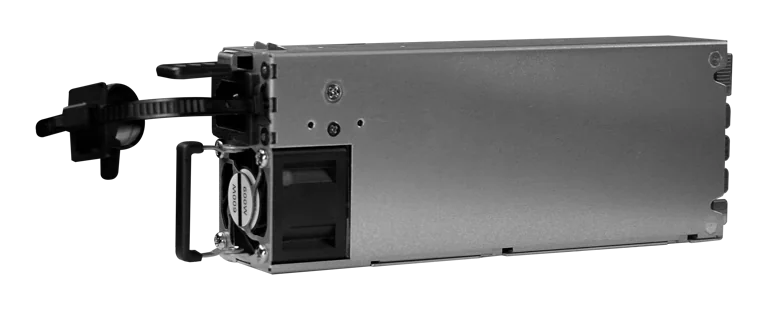
Buy MikroTik G1483-0600WNB in Kenya, a 600W hot-swappable 54.5V 10.35A power supply for the CRS320-8P-8B-4S+RM PoE++ switch, support
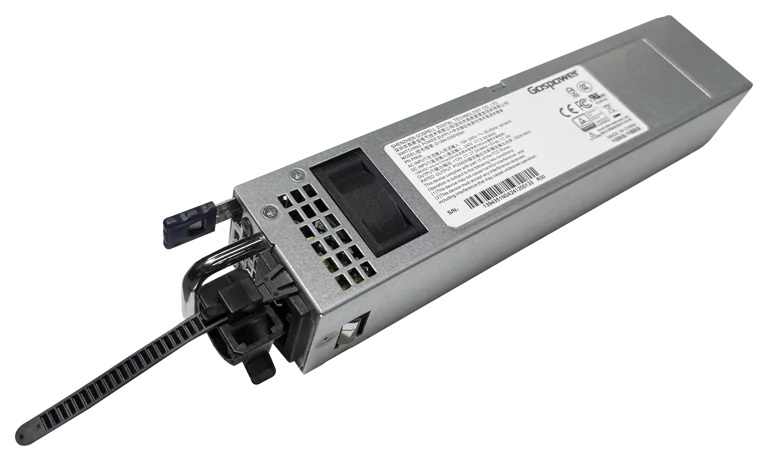
Buy MikroTik G1394-0350WNA in Kenya, a 350W hot-swappable 12V DC 27.5A AC power supply designed for the MikroTik CRS804 DDQ 400G swi
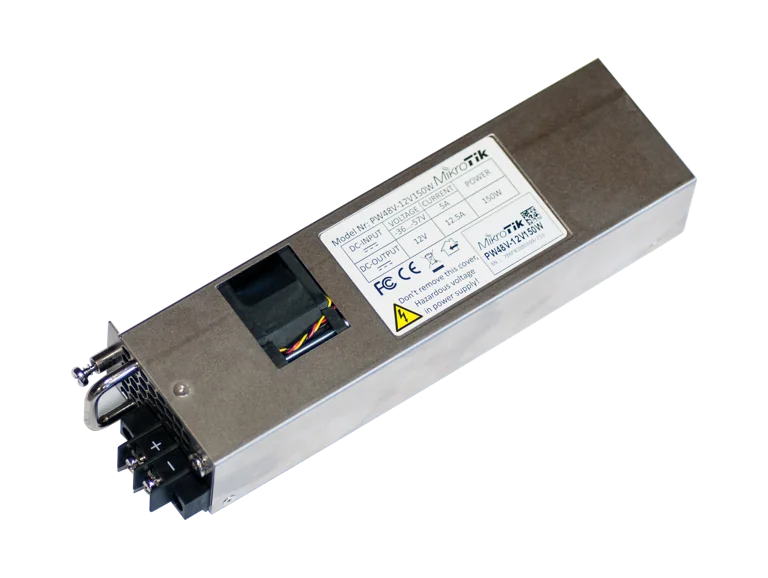
Buy MikroTik PW48V-12V150W in Kenya, a 150W hot-swappable -48V DC telecom power supply for CCR1072, CCR2216, CRS518 and CRS520 high-
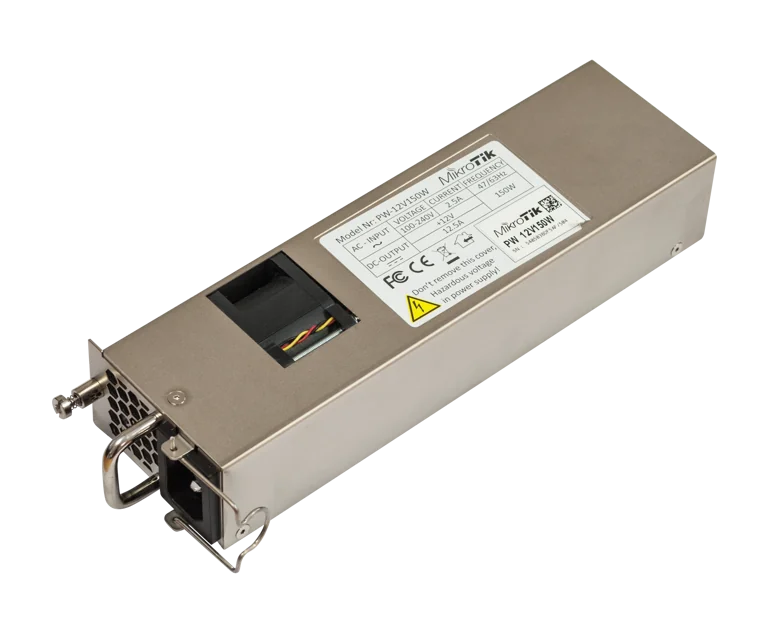
Buy MikroTik 12POW150 in Kenya, a 12V 150W hot-swap AC/DC power supply for CCR1072, CCR2216, CRS518 and CRS520 high-availability net
