Who is this product best for?
- Home and small office routing
- Business internet edge routing
- ISP customer or branch deployments


Works with compatible MikroTik RouterOS networks and standard Ethernet networking equipment. Confirm port, power and mounting requirements before purchase.
Check the product label or manufacturer datasheet for exact input voltage, PoE support and power adapter requirements.
The MikroTik GPEN11 is a compact wall-mountable Gigabit passive PoE injector designed for Internet Service Providers, apartment networks, enterprise deployments and professional MikroTik installations. It forms part of MikroTik's GPEN – Gigabit Passive Ethernet Network concept, which was developed as a lower-cost, easier-to-deploy Ethernet-based alternative for certain last-mile network scenarios traditionally served by GPON. (MikroTik)
Unlike a loose inline PoE injector, the GPEN11 is designed to be mounted neatly on a wall at the subscriber premises. It provides two Gigabit Ethernet interfaces and passive PoE output, allowing the customer's indoor network equipment to connect while power is injected toward compatible upstream networking devices. MikroTik also provides a dedicated area on the front for ISP branding, measuring approximately 6.6 × 2.54 cm. (MikroTik)
The GPEN11 supports 12–57V DC input, Gigabit Ethernet and passive PoE output. It is therefore particularly useful for apartment internet distribution, WISP infrastructure, multi-dwelling units and Ethernet-based last-mile networks where a clean customer-side installation is required. (Mikrotik Store)
MikroTik currently lists the GPEN11 at a suggested international price of US$14. A Kenyan retailer currently lists it at approximately KES 2,000 + VAT, though local pricing can change depending on stock availability, exchange rates and supplier costs. (MikroTik)
For genuine MikroTik GPEN products, PoE accessories, network design and professional deployment support, customers can source networking equipment through Mikrotik Kenya.
MikroTik GPEN11 SpecificationsSpecificationDetailsProduct CodeGPEN11Product TypeWall-Mount Passive PoE InjectorNetwork ConceptGPEN – Gigabit Passive Ethernet NetworkEthernet Ports2 × 10/100/1000 MbpsMaximum Ethernet Speed1 GbpsPoE TypePassive PoEPoE-OutYesDC Inputs1DC Input TypeDC JackInput Voltage12–57V DCSoftware ManagementNoRouterOSNoSwOSNoWall MountingYesISP Branding AreaYesSticker SizeApprox. 6.6 × 2.54 cmOperating Temperature-40°C to +70°CTypical InstallationIndoor customer premisesManufacturer Suggested PriceUS$14Best ForISPs, apartments, GPEN and Ethernet last-mile networksThe current MikroTik product information confirms two Gigabit Ethernet ports, 12–57V input and passive PoE output. (MikroTik)
MikroTik GPEN11 Price in KenyaA Kenyan retailer listed the GPEN11 at KES 2,000 + VAT as of late 2025, while current international listings show considerable regional variation. (Hubtech Nairobi Kenya)
For SEO and customer-facing content, it is better to treat this as an indicative price rather than a permanent fixed price.
What Is MikroTik GPEN?GPEN stands for Gigabit Passive Ethernet Network.
MikroTik developed the concept to provide ISPs with a cost-effective method of delivering Gigabit Ethernet connectivity to customers using conventional Ethernet infrastructure. (MikroTik)
GPEN ComponentTypical FunctionGPEN11Customer-side passive PoE injectorGPEN21Managed GPEN endpointGPeRGigabit Passive Ethernet RepeaternetPowerMulti-subscriber distributionEthernet CablingLast-mile connectivityFiber/SFP UplinkProvider network connectionThe approach can be particularly attractive in apartment buildings and other multi-dwelling developments.
Key Features of MikroTik GPEN11The GPEN11 provides two 10/100/1000 Mbps Ethernet ports, allowing it to support full Gigabit Ethernet connectivity. (Mikrotik Store)
Ethernet FeatureGPEN11Ethernet Ports210 MbpsSupported100 MbpsSupported1000 MbpsSupportedMaximum Ethernet Rate1 GbpsPassive PoESupportedGigabit support is important for modern broadband services because it prevents the injector itself from introducing a 100 Mbps Fast Ethernet bottleneck.
2. 12–57V DC Power InputThe GPEN11 supports a broad 12–57V DC input range. (Mikrotik Store)
Power FeatureDetailsDC Inputs1Input MethodDC JackVoltage Range12–57VPoE OutputPassiveAutomatic PoE NegotiationNoThis broad input range provides flexibility, but the voltage still needs to match the requirements of the connected upstream equipment.
Because the output is passive PoE, correct voltage selection is essential.
3. Passive PoE OutputThe GPEN11 supplies passive PoE toward compatible uplink equipment. (MikroTik)
PoE FeatureDetailsPoE TypePassivePower NegotiationNoUplink Device PoweringYesDevice Compatibility CheckRequiredConfigurationNonePassive PoE differs from active IEEE 802.3af/at PoE because there is no automatic power negotiation.
Before installing the GPEN11, technicians should therefore confirm:
Supported voltage
Input polarity
Powered-device requirements
Ethernet compatibility
Cable length
Power consumption
One of the most distinctive characteristics of the GPEN11 is its wall-mount form factor.
MikroTik's installation documentation shows that the enclosure can be opened and mounted directly to a wall, creating a cleaner subscriber installation than a loose injector hanging from Ethernet cables. (MikroTik Help)
Installation FeatureBenefitWall MountingCleaner deploymentEnclosed InjectorBetter organizationBottom Cable RouteNeater cablingThrough-Wall OptionConcealed installationISP Branding AreaProfessional customer presentationThis design is especially useful for ISPs installing hundreds or thousands of subscriber endpoints.
5. Dedicated ISP Branding AreaMikroTik designed a dedicated front area where the ISP can apply its company branding.
The official stated sticker size is approximately 6.6 × 2.54 cm. (MikroTik)
This area can be used to display:
ISP logo
Customer-support number
Network name
Technical-support details
Installation ID
QR code
Service contact
For an ISP, this can turn the GPEN11 into part of the company's customer-facing installation rather than just a hidden technical component.
How MikroTik GPEN11 WorksA simplified GPEN11 installation may look like:
Customer Router → GPEN11 → Ethernet Cable → GPeR/netPower/Upstream Device
The power adapter connects to the GPEN11.
StageFunctionCustomer RouterProvides local network connectionGPEN11Injects passive PoEEthernet CableCarries Gigabit data + powerGPeR / Upstream EquipmentExtends or receives EthernetISP NetworkProvides internet connectivityThis allows the customer's premises to provide power toward the upstream Ethernet infrastructure.
GPEN11 and Reverse-Powered ISP NetworksOne of the interesting aspects of MikroTik's GPEN architecture is that power can originate from the customer side.
This is particularly relevant when used alongside products such as MikroTik netPower devices that support reverse PoE.
Traditional NetworkGPEN ApproachCentral equipment powers networkCustomer may power subscriber linkLarger central power systemDistributed powering possibleDedicated GPON equipmentEthernet-based infrastructureOptical splitters/OLT modelGPEN Ethernet architectureMikroTik's netPower product family specifically promotes GPEN as a lower-cost approach to providing individual apartment internet connections. (MikroTik)
GPEN11 with MikroTik GPeRThe GPeR is a Gigabit Passive Ethernet Repeater that can extend Ethernet beyond the conventional single-segment distance.
MikroTik states that a GPeR can add roughly 100–150 metres when connecting to ordinary network equipment and up to around 210 metres when connecting to another GPeR, with multiple units allowing deployments up to approximately 1,500 metres. (MikroTik)
A deployment can therefore look like:
GPEN11 → Ethernet → GPeR → Ethernet → GPeR → Network
ComponentRoleGPEN11Supplies network and passive powerGPeRRegenerates/extents Gigabit EthernetEthernet CableCarries data and powernetPowerNetwork distributionCustomer RouterLocal internet accessThis can be useful in apartment blocks, campuses, compounds and other environments where distances exceed conventional Ethernet runs.
MikroTik GPEN11 vs GPEN21FeatureGPEN11GPEN21Ethernet Ports2 Gigabit2 GigabitPassive PoEYesYesSFP Fiber PortNoYesManagementNoYesSwOS LiteNoYesVLAN SupportNoYesSNMPNoYesACLNoYesTraffic ShapingNoYesLink MonitoringNoYesInstallationWall-mountedWall/cabinetBest ForSimple GPEN endpointManaged GPEN endpointSuggested Price$14HigherThe GPEN11 is the simpler and more affordable solution.
The GPEN21 is more suitable when the ISP needs fiber connectivity and managed Layer 2 functionality.
GPEN11 vs RBGPOEFeatureGPEN11RBGPOEGigabit EthernetYesYesPassive PoEYesYesWall-Mount EnclosureYesNoISP BrandingYesNoGPEN IntegrationYesLimitedSubscriber InstallationExcellentBasicPortable InjectorLess suitableExcellentManagementNoNoBoth devices can provide passive PoE, but the GPEN11 has been specifically designed for permanent ISP/customer-premises installation.
GPEN11 vs Basic PoE InjectorFeatureGPEN11Basic PoE InjectorGigabit EthernetYesModel dependentWall MountYesUsually NoISP Branding AreaYesNoPassive PoEYesUsuallyGPEN IntegrationYesNoCustomer-Facing DesignYesRareInstallation OrganizationExcellentBasicApplications of MikroTik GPEN11 in KenyaThe GPEN11 is particularly well suited to apartments and multi-dwelling units.
Internet service providers can use Ethernet infrastructure to distribute internet throughout a building while installing a GPEN11 at each customer premises.
Potential benefits include:
Gigabit connectivity
Simple customer-side equipment
Low hardware cost
Neat installations
ISP branding
Easy maintenance
Large residential developments can use GPEN infrastructure for connectivity between homes, security points and network distribution locations.
The GPEN11 can provide the customer-side powering interface.
Wireless ISP NetworksWISPs can use the GPEN11 in subscriber networks where power needs to travel toward compatible outdoor or intermediate network equipment.
HotelsHotel networks may use GPEN architecture across:
Guest rooms
Staff areas
Apartments
Conference facilities
Outdoor buildings
Security offices
Educational institutions can use GPEN-based Ethernet networking between:
Classrooms
Hostels
Laboratories
Libraries
Administration buildings
Campus facilities
An ISP supplying internet to multiple offices in one building may use Ethernet-based distribution instead of installing separate active networking equipment at every endpoint.
Advantages of MikroTik GPEN11AdvantageDescriptionGigabit EthernetSupports high-speed broadbandLow CostAffordable subscriber endpointPassive PoEPowers compatible uplink equipmentWall-MountableProfessional installationISP BrandingCustomer-facing identificationWide Input Range12–57VNo ConfigurationSimple installationGPEN CompatibilityIntegrates with MikroTik ecosystemCompact DesignSuitable for subscriber premisesInstallation ConsiderationsBefore installing a GPEN11, consider the following:
RequirementRecommendationPowered DeviceConfirm passive PoE compatibilityVoltageMatch upstream equipmentEthernet CableUse quality pure-copper cableMounting SurfaceSecure indoor wallMoistureAvoid direct exposureCable RoutingPlan bottom or through-wall entryCustomer RouterConfirm Gigabit interfaceISP DesignEnsure GPEN topology is appropriateDistanceAccount for Ethernet limitationsGPeR UseAdd repeaters where necessaryMikroTik's user manual provides dedicated wall-mounting instructions for the device. (MikroTik Help)
Who Should Buy MikroTik GPEN11?The GPEN11 is especially useful for:
Internet Service Providers
Wireless ISPs
Apartment internet providers
Property developers
Network installers
Hotels
Universities
Schools
Enterprise IT teams
Estate network operators
Managed service providers
It is most attractive where a clean, low-cost subscriber-side Gigabit PoE endpoint is required.
Why Buy MikroTik GPEN11 from Mikrotik Kenya?Using original MikroTik GPEN components helps ensure compatibility across the wider network architecture.
Customers can receive assistance planning systems involving:
GPEN11
GPEN21
GPeR
netPower switches
Ethernet cabling
Fiber uplinks
Subscriber routers
Passive PoE requires careful voltage selection. Professional guidance can help ensure the GPEN11 is correctly paired with the upstream equipment.
Mikrotik Kenya can assist with network solutions for:
Apartments
Estates
Hotels
Schools
Office blocks
WISP networks
Enterprise campuses
The MikroTik GPEN11 is a wall-mounted Gigabit passive PoE injector designed as part of MikroTik's GPEN last-mile networking architecture. (MikroTik)
GPEN means Gigabit Passive Ethernet Network. MikroTik developed it as a lower-cost and easier-to-deploy Ethernet-based networking concept for certain last-mile applications. (MikroTik)
A Kenyan retailer currently lists the GPEN11 at approximately KES 2,000 + VAT. MikroTik's manufacturer suggested price is US$14. Actual Kenya pricing can change according to stock, exchange rates and supplier costs. (Hubtech Nairobi Kenya)
The GPEN11 has two 10/100/1000 Mbps Ethernet ports, allowing Gigabit Ethernet connectivity. (Mikrotik Store)
Yes. Both its Ethernet interfaces support up to 1 Gbps. (Mikrotik Store)
The GPEN11 supports 12–57V DC input. (Mikrotik Store)
The GPEN11 provides passive PoE. It does not perform automatic IEEE 802.3af/at power negotiation. (Mikrotik Store)
No. The upstream device must support the voltage and passive PoE arrangement supplied by the GPEN11. Always verify the exact powered-device specifications.
No. GPEN11 is an unmanaged PoE injector and does not run RouterOS. MikroTik's managed GPEN21 model instead uses SwOS Lite. (MikroTik Help)
The GPEN11 itself does not perform VLAN management. It passes network traffic through its Ethernet connection. If managed VLAN functionality is required at this endpoint, GPEN21 is the more appropriate product.
No. It does not provide an SNMP management interface. GPEN21 provides managed features such as SNMP.
No. GPEN11 uses Gigabit Ethernet only. For a GPEN endpoint with an SFP interface, consider the GPEN21.
GPEN11 is a simple passive PoE injector with two Gigabit Ethernet ports. GPEN21 adds an SFP fiber interface and SwOS-based management functionality.
Yes. GPEN11 can be used as part of MikroTik's wider GPEN architecture together with products such as GPeR and netPower. (MikroTik)
GPeR is a Gigabit Passive Ethernet Repeater designed to extend Ethernet beyond the normal single cable-segment distance. Multiple GPeR devices can be combined for longer GPEN runs. (MikroTik)
MikroTik states that one GPeR can add around 100–150 m to regular network equipment or up to approximately 210 m to another GPeR, with chained deployments potentially extending toward 1,500 m depending on configuration. (MikroTik)
Yes. Apartment and multi-dwelling-unit broadband is one of the most natural uses for MikroTik's GPEN concept. MikroTik markets related netPower equipment specifically around delivering internet to individual apartments. (MikroTik)
Yes. MikroTik provides a dedicated front branding area measuring approximately 6.6 × 2.54 cm. (MikroTik)
Yes. It is specifically designed for wall mounting, and MikroTik provides dedicated mounting instructions in its user manual. (MikroTik Help)
The GPEN11's mounting design supports cable routing suitable for neat wall installations, including routing the Ethernet connection toward or through the mounting surface. (MikroTik Help)
It should be treated as an indoor/protected customer-premises device rather than a weatherproof outdoor injector. If outdoor deployment is unavoidable, a suitable weatherproof enclosure should be used.
Published specifications list a tested operating temperature range of approximately -40°C to +70°C. (Mikrotik Store)
No. The GPEN11 does not create bandwidth or make the ISP connection faster. It supports Gigabit Ethernet so that it does not unnecessarily limit a compatible high-speed connection.
No. GPEN11 is a PoE injector. It does not perform NAT, DHCP, firewalling, routing or Wi-Fi functions.
Not directly. GPEN and GPON are fundamentally different network architectures. GPEN uses Ethernet-based infrastructure, while GPON uses passive optical networking and requires compatible optical equipment.
MikroTik positions GPEN as a low-cost and easier-to-deploy alternative for certain scenarios, especially apartment networks. Whether it is cheaper in a particular project depends on building size, distances, cabling, power requirements, maintenance and existing infrastructure. (MikroTik)
Yes. It can be useful for Kenyan ISPs deploying apartment, estate or Ethernet-based last-mile networks where Gigabit connectivity and low-cost passive PoE are appropriate.
Use good-quality pure-copper Cat5e, Cat6 or better cabling appropriate to the required network speed and installation conditions. For longer PoE runs, cable quality is particularly important because resistance produces voltage drop.
Yes, the customer-facing Ethernet side can connect to a normal router or other Ethernet equipment. The passive-PoE side must still be correctly matched to the upstream powered device.
No. GPEN11 itself is unmanaged and requires no software configuration.
Yes. Its wall-mount design, ISP branding area, simple passive operation and low cost make it particularly suitable for standardized subscriber installations.
You can purchase MikroTik GPEN products and obtain network-design and compatibility assistance through Mikrotik Kenya.
MikroTik GPEN11 Video GuideWatch the video: MikroTik GPEN11 Networking Guide
The MikroTik GPEN11 is designed around a different approach to subscriber networking than simply placing loose PoE adapters and active switches throughout a building. By creating a dedicated wall-mounted customer endpoint, the ISP can provide a cleaner installation while using Gigabit Ethernet infrastructure to carry network traffic and power toward compatible upstream equipment. The front branding area is a small but valuable addition for providers because it gives the finished installation a standardized, professional appearance rather than leaving generic networking accessories exposed at the customer's premises. (MikroTik)
The GPEN concept becomes particularly interesting when the GPEN11 is combined with devices such as GPeR repeaters and netPower distribution switches. Ethernet has a conventional distance limitation per cable segment, but MikroTik's GPeR allows additional Ethernet hops to extend network reach. This gives ISPs another option when designing connectivity for apartment blocks, estates and campuses where running a dedicated optical fiber to every individual endpoint may not be the most economical architecture. (MikroTik)
For Kenyan ISPs and property developers, the GPEN11 can therefore be considered as part of an overall network architecture rather than simply another PoE injector. Proper planning should include Ethernet cable quality, subscriber bandwidth requirements, powering voltage, GPeR placement, distribution-switch capacity and network redundancy. When those elements are properly engineered, GPEN can offer a practical method of delivering Gigabit-capable Ethernet services while keeping subscriber-side hardware straightforward and affordable.
The MikroTik GPEN11 is a compact and affordable wall-mounted Gigabit passive PoE injector designed specifically for MikroTik's Gigabit Passive Ethernet Network architecture. With two Gigabit Ethernet ports, 12–57V power input, passive PoE output and dedicated ISP branding space, it is particularly well suited to apartment broadband, estates, WISP infrastructure and other customer-premises installations. (MikroTik)
Its main advantage is simplicity. Unlike the GPEN21, the GPEN11 does not include SFP connectivity, SNMP, VLAN management or SwOS configuration. This makes it a cost-effective choice where the ISP needs a straightforward subscriber endpoint rather than a managed Layer 2 device. When combined with GPeR repeaters and netPower distribution hardware, it becomes part of a scalable Ethernet-based last-mile architecture. (MikroTik)
Whether you require the GPEN11 for an apartment internet network, ISP subscriber installation, estate deployment, office building, hotel, school or GPEN last-mile project, Mikrotik Kenya provides genuine MikroTik networking products, GPEN equipment, professional product-selection assistance and networking solutions for projects across Kenya.
Reviews are not available yet for this product.
GPEN11 is currently listed as available. Stock can change, so confirm availability before placing a large order.
The current listed price is KSh 3,500.00. Prices are generated from the product catalogue and may change when inventory is updated.
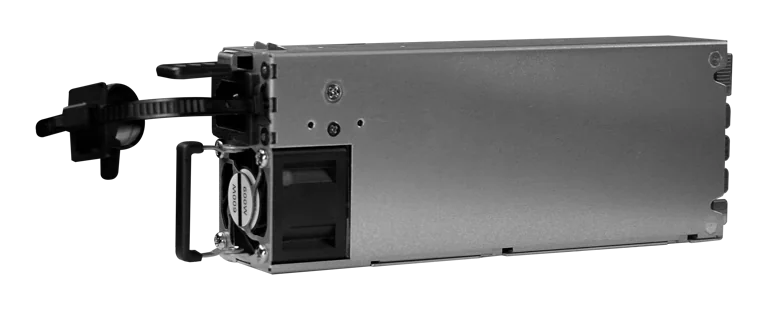
Buy MikroTik G1483-0600WNB in Kenya, a 600W hot-swappable 54.5V 10.35A power supply for the CRS320-8P-8B-4S+RM PoE++ switch, support
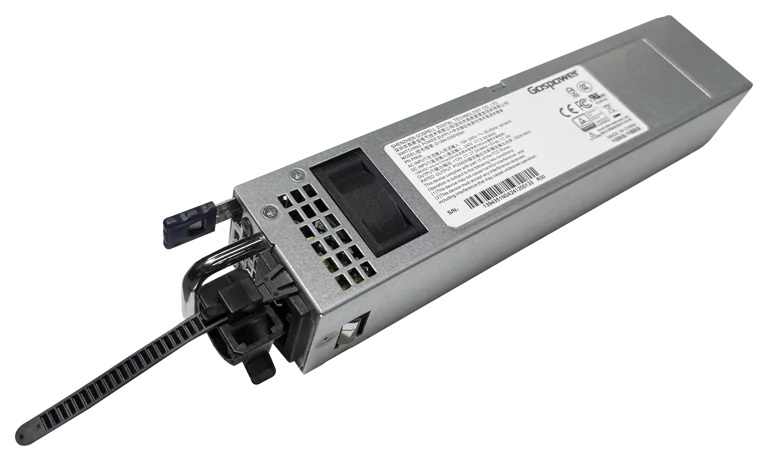
Buy MikroTik G1394-0350WNA in Kenya, a 350W hot-swappable 12V DC 27.5A AC power supply designed for the MikroTik CRS804 DDQ 400G swi
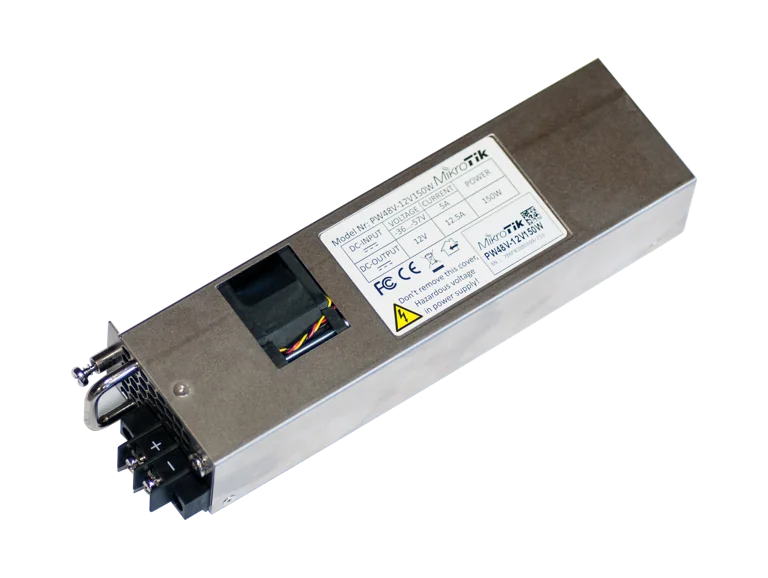
Buy MikroTik PW48V-12V150W in Kenya, a 150W hot-swappable -48V DC telecom power supply for CCR1072, CCR2216, CRS518 and CRS520 high-
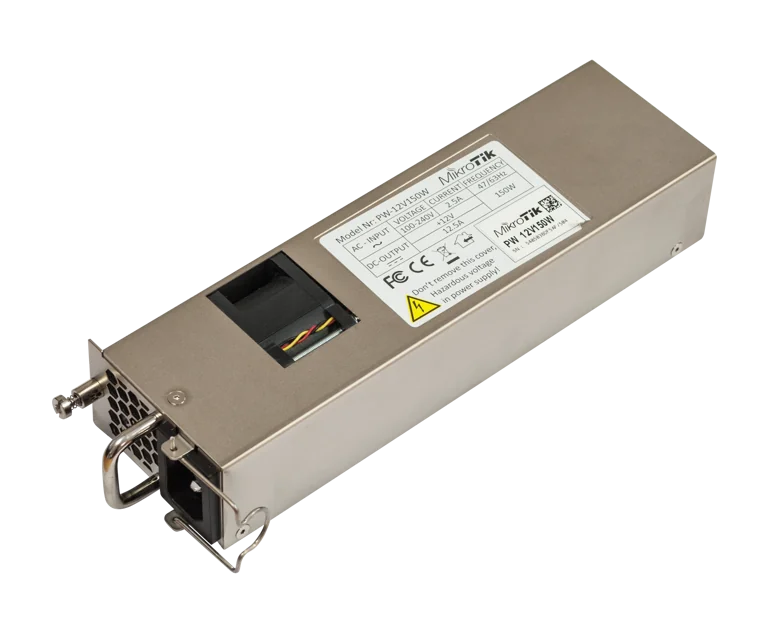
Buy MikroTik 12POW150 in Kenya, a 12V 150W hot-swap AC/DC power supply for CCR1072, CCR2216, CRS518 and CRS520 high-availability net