Who is this product best for?
- Home and small office routing
- Business internet edge routing
- ISP customer or branch deployments

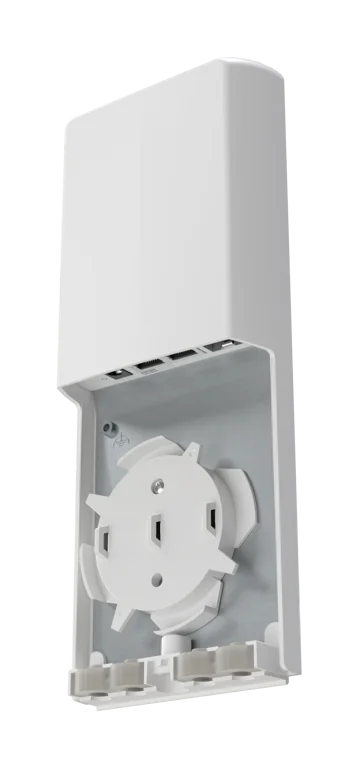
Works with compatible MikroTik RouterOS networks and standard Ethernet networking equipment. Confirm port, power and mounting requirements before purchase.
Check the product label or manufacturer datasheet for exact input voltage, PoE support and power adapter requirements.
The MikroTik FTC21 is a compact, weatherproof Fiber-to-Copper converter designed to convert a 1G or 2.5G SFP fiber connection into Gigabit RJ45 Ethernet while adding smart network-management capabilities through SwOS Lite. Unlike a basic unmanaged media converter, the FTC21 includes its own Marvell 88E6341 switch chip, allowing administrators to monitor interfaces, configure VLANs, use SNMP, apply basic traffic shaping and create Access Control Lists. (MikroTik)

The FTC21 includes two 10/100/1000 Ethernet ports and one SFP slot supporting up to 2.5G, making it especially useful for ISPs, enterprise fiber networks, CCTV systems, hotels, campuses, apartment networks and building-to-building fiber installations. Its IP55 enclosure also makes it suitable for protected outdoor installations when mounted correctly. (MikroTik)
Powering is flexible. The FTC21 supports both a 24–57V DC jack and 24–57V IEEE 802.3af/at PoE input. Power consumption is very low at approximately 3W without attachments and 4W maximum. MikroTik currently lists the FTC21 at a suggested international price of US$59. (MikroTik)
For genuine MikroTik media converters, SFP modules, switches, routers and complete fiber-networking solutions, customers can source the FTC21 through Mikrotik Kenya.
MikroTik FTC21 Detailed SpecificationsSpecificationDetailsProduct CodeFTC21Product TypeManaged Fiber-to-Copper ConverterEthernet Ports2 × 10/100/1000 MbpsSFP Ports1Maximum SFP Speed2.5G supportedSwitch ChipMarvell 88E6341Operating SystemSwOS LitePoE-InIEEE 802.3af/atPoE-In Voltage24–57VDC Jack Input24–57VMaximum Power Consumption4WConsumption Without Attachments3WCoolingPassiveWeather ProtectionIP55Operating Temperature-40°C to +70°CMTBFApprox. 100,000 hours at 25°CDimensions254 × 97 × 35 mmVLAN SupportYesSNMPYesTraffic ShapingYesACL FilteringYesCertificationsCE, EAC, RoHSSuggested Manufacturer PriceUS$59MikroTik's current product page confirms the two Gigabit Ethernet ports, 2.5G-capable SFP slot, 24–57V powering, IP55 enclosure and SwOS Lite management. (MikroTik)
What Is the MikroTik FTC21?The FTC21 is a managed media converter.
Its primary job is to bridge a fiber link and copper Ethernet:
Fiber SFP → FTC21 → Gigabit RJ45 Ethernet
The difference between FTC21 and many simple media converters is that MikroTik adds switching and management functionality instead of merely converting the physical medium.
SwOS Lite gives administrators control over how traffic passes between the fiber and Ethernet interfaces, making the FTC21 suitable for more professional networks where VLANs, monitoring or packet filtering are required. (MikroTik)
Key Features of MikroTik FTC21The FTC21 has one SFP slot supporting 1G and up to 2.5G operation. (MikroTik Help)
This gives installers more flexibility than a conventional Gigabit-only media converter.
Depending on the selected SFP transceiver, the FTC21 can be used with:
Single-mode fiber
Multimode fiber
Short-distance fiber connections
Longer building-to-building fiber links
ISP distribution networks
Enterprise backbone connections
The exact transmission distance depends primarily on the SFP module and fiber type selected.
2. Dual Gigabit Ethernet PortsThe FTC21 includes two 10/100/1000 Mbps Ethernet interfaces. (MikroTik Help)
This provides more flexibility than a traditional one-fiber-to-one-copper converter.
One Ethernet port can serve as the uplink or PoE input while another can connect the remote network device.
3. SwOS Lite ManagementThe FTC21 runs a full version of SwOS Lite.
MikroTik highlights capabilities including:
Interface monitoring
Interface management
VLAN support
SNMP
Basic traffic shaping
Advanced Access Control Lists
Packet filtering
Packet accounting
VLAN tagging
(MikroTik)
These features make FTC21 suitable for managed enterprise and ISP environments where a basic plug-and-play media converter would offer too little control.
4. VLAN SupportVLAN support allows administrators to separate different types of traffic while using the same fiber infrastructure.
For example, a single fiber link could transport separate networks for CCTV, staff internet, guest Wi-Fi and network management.
This can be especially useful for:
Hotels
Universities
Apartments
ISPs
Enterprise campuses
FTC21 supports SNMP reporting, allowing the device to be incorporated into centralized network-monitoring systems. (MikroTik)
This is useful when technicians need visibility into remote fiber endpoints without visiting the installation physically.
6. Advanced ACL FilteringThe FTC21's Access Control Lists can work with information from Layer 2, Layer 3 and Layer 4 protocol headers.
MikroTik specifies that ACLs can be used for:
Packet filtering
Traffic accounting
VLAN tagging
(MikroTik)
This adds meaningful control for such a compact device.
7. IP55 Weather ProtectionThe FTC21 is housed in an IP55 weather-resistant enclosure. (MikroTik)
This allows it to be installed indoors or outdoors when the mounting requirements are followed.
For outdoor use, MikroTik recommends orienting the cable openings downward and properly grounding the installation. (MikroTik Help)
8. Flexible PoE and DC PoweringThe FTC21 supports two powering methods.
It can receive:
24–57V through the DC jack
24–57V through 802.3af/at PoE
This is useful where the converter needs to be placed at a remote site without a convenient power socket.
9. Very Low Power ConsumptionThe FTC21 consumes approximately 3W under normal operation without attachments and up to 4W maximum. (MikroTik)
Passive cooling means there is no internal fan, which can help reduce noise and mechanical maintenance requirements.
FTC21 Interfaces and PoweringInterface / Power FeatureDetailsEthernet 110/100/1000 Mbps, supports PoE-inEthernet 210/100/1000 MbpsSFP1G / 2.5G supportedDC Jack24–57VPoE-In802.3af/atPoE Voltage24–57VDefault UplinkEther1Other Ports by DefaultIsolated from one anotherCoolingPassiveMax Consumption4WMikroTik's current manual states that the uplink can be changed to any port. Whichever port is selected as the uplink, the other two are isolated by default. (MikroTik Help)
FTC21 Default Port ArchitectureA useful characteristic of FTC21 is its configurable uplink architecture.
By default:
Ether1 = Uplink
Ether2 = Isolated endpoint
SFP = Isolated endpoint
However, MikroTik allows the uplink port to be changed through configuration. (MikroTik Help)
This makes the unit more flexible for different fiber-to-copper layouts.
FTC21 vs Basic Media ConverterA standard media converter usually performs one simple task:
Fiber ↔ Copper
The FTC21 adds:
SwOS Lite
VLANs
SNMP
ACL filtering
Traffic shaping
Two Gigabit Ethernet ports
2.5G SFP support
PoE powering
Outdoor IP55 protection
This makes FTC21 more suitable for professionally managed network infrastructure.
FTC21 vs FTC11XGFTC21 and FTC11XG serve different performance requirements.
The FTC21 is designed around Gigabit copper and up to 2.5G SFP connectivity, while FTC11XG targets 10 Gigabit fiber-to-copper conversion.
Choose FTC21 when 1G Ethernet and up to 2.5G fiber are sufficient.
Choose FTC11XG where full 10G SFP+ and 10GBase-T connectivity are required.
FTC21 vs FTC21-upsFTC21-ups builds on the FTC21 concept by adding an integrated battery backup system.
The standard FTC21 does not contain that integrated battery.
Choose FTC21 when:
Standard external power reliability is sufficient
Lower cost is important
Battery backup is already available elsewhere
Choose FTC21-ups when the fiber endpoint must survive short power interruptions without external UPS equipment.
Applications of MikroTik FTC21 in KenyaThe FTC21 can be used across many fiber-networking projects, including:
ISP customer connections
Enterprise buildings
Hotels and resorts
Schools and universities
CCTV networks
Apartment complexes
Building-to-building fiber
Industrial environments
Remote network cabinets
It is especially useful where a managed fiber endpoint is required but full 10G capability would be unnecessary.
Fiber-to-Copper ExampleA typical deployment might look like:
Core Fiber Switch → Fiber Cable → FTC21 → Gigabit Ethernet Switch
In another deployment:
ISP Fiber → FTC21 → Customer Router
The SFP transceiver determines the optical characteristics of the link, while FTC21 provides the conversion to copper Ethernet.
What Comes with MikroTik FTC21?MikroTik includes:
48V 0.95A power adapter
Gigabit PoE injector
K-81 fastening set
(MikroTik)
This means the unit can normally be installed without purchasing a separate injector or power adapter.
The SFP module must still be selected according to the intended fiber connection.
Why Buy MikroTik FTC21 from Mikrotik Kenya?Customers buying through Mikrotik Kenya can source not only the FTC21 but the other parts required for a complete fiber deployment.
These can include:
SFP modules
Fiber patch cords
MikroTik routers
MikroTik switches
PoE accessories
Ethernet cabling
Outdoor networking accessories
Fiber installation equipment
Correctly matching the FTC21 with the appropriate SFP module is important because fiber type, wavelength and distance all affect compatibility.
Frequently Asked Questions About MikroTik FTC21The MikroTik FTC21 is an IP55 managed Fiber-to-Copper converter with two Gigabit Ethernet ports, one SFP slot supporting up to 2.5G and SwOS Lite management. It is intended for converting fiber connections into copper Ethernet while giving network administrators VLAN, SNMP, traffic-shaping and ACL capabilities. What is the MikroTik FTC21 price in Kenya?
MikroTik currently lists an international suggested price of US$59. The actual FTC21 price in Kenya can differ due to exchange rates, shipping costs, VAT, reseller margins and current stock availability. For an accurate Kenyan selling price, customers should confirm current stock with Mikrotik Kenya.
Its main function is to convert a fiber Ethernet connection from an SFP transceiver into conventional RJ45 copper Ethernet. Because it also contains a switch chip and SwOS Lite, it can additionally manage VLANs, monitor interfaces and apply basic Layer 2 traffic controls.
Yes. MikroTik specifies that the FTC21's SFP interface supports up to 2.5G. Its copper Ethernet interfaces remain Gigabit ports.
No. The two copper Ethernet interfaces are 10/100/1000 Mbps Gigabit Ethernet ports. The 2.5G capability applies to the SFP interface.
FTC21 has two 10/100/1000 Mbps RJ45 Ethernet ports. Either straight-through or crossover Ethernet cables can be used because the interfaces support Auto MDI/X.
It has one SFP slot, and MikroTik specifies that this slot supports up to 2.5G operation
The FTC21 provides the SFP slot, but the optical module needs to be selected according to the network design. This allows you to choose the correct module for single-mode or multimode fiber, wavelength and transmission distance.
Yes, provided you install a compatible single-mode SFP transceiver. The maximum fiber distance is primarily determined by the selected module and the quality of the fiber infrastructure.
Yes. A compatible multimode SFP can be used for shorter-distance links such as within buildings, server rooms or campus facilities.
FTC21 itself does not define one fixed fiber distance. The maximum distance is determined by the installed SFP module. A short-range multimode module may cover hundreds of metres, while compatible single-mode modules can support multi-kilometre links.
Yes. Both RJ45 ports support 10/100/1000 Mbps Ethernet.
Not directly through a 2.5G RJ45 port because the FTC21's copper interfaces are limited to Gigabit Ethernet. The SFP interface can support 2.5G, but the copper interfaces are 1G.
FTC21 uses SwOS Lite, MikroTik's lightweight switch-management operating system.
No. FTC21 does not run RouterOS. It uses SwOS Lite, which focuses mainly on switching and interface-management functions rather than routing, firewalling, VPNs or other RouterOS capabilities.
Yes. VLAN support is one of the management features provided through SwOS Lite. This allows administrators to transport and separate different network services across the fiber connection.
Yes. MikroTik lists SNMP reporting among its SwOS Lite capabilities. This allows FTC21 to be monitored by compatible network-monitoring platforms.
It supports basic traffic shaping through SwOS Lite. This can be useful for simple bandwidth-management requirements, although advanced traffic management is normally better handled by a RouterOS router.
Yes. FTC21 supports advanced ACL functionality that can evaluate information from Layer 2, Layer 3 and Layer 4 headers. MikroTik states that these rules can be used for filtering, accounting and VLAN tagging.
Yes. Its Access Control Lists can be used for packet filtering according to configured conditions. This makes it more capable than a conventional unmanaged fiber media converter.
Yes. SwOS Lite provides interface monitoring and SNMP reporting, allowing administrators to supervise remote FTC21 installations through their network-management systems.
It uses the Marvell 88E6341 switch chip.
MikroTik's current manual instructs initial users to access the device at 192.168.88.1. A computer can initially be configured with an address such as 192.168.88.2/24 to reach the management interface.
The default username is admin, and MikroTik's manual states that there is no password by default. A strong password should therefore be configured immediately during initial setup.
MikroTik's documentation notes that the device can also be reached using a leased address from a DHCP server, depending on the configuration.
Yes. MikroTik recommends downloading the latest SwOS Lite software and uploading it through the Upgrade section of the management interface.
FTC21 includes backup SwOS Lite firmware. MikroTik states that holding the reset button during startup can load the backup firmware, allowing administrators to reconnect to the device and reinstall normal firmware.
Yes. Ethernet1 supports IEEE 802.3af/at PoE-in.
The PoE input supports 24–57V DC according to MikroTik's current specifications. (
Yes. MikroTik officially lists IEEE 802.3af PoE input support.
Yes. IEEE 802.3at is also supported.
Yes. The DC power jack accepts 24–57V DC.
Yes. Both MikroTik's DC-jack and PoE specifications start at 24V, provided the selected power source is compatible with the intended powering method.
Yes. MikroTik includes a 48V 0.95A power adapter with the FTC21.
Yes. A Gigabit PoE injector is included in the package. (
The device consumes approximately 3W without attachments and a maximum of 4W.
No. FTC21 uses passive cooling, meaning there is no built-in fan.
FTC21 carries an IP55 rating. It provides weather resistance for appropriate outdoor installations, but it should not be treated as an IP67 or IP68 submersible device.
Yes. MikroTik specifically states that FTC21 can be installed indoors or outdoors on a wall, pole or mast. Proper installation practices must be followed.
MikroTik recommends mounting it with the cable openings facing downward. The enclosure should be closed securely and the installation should be properly grounded.
Yes. The included mounting system can be attached to a pole or mast. A steel hose clamp can be used, although MikroTik notes that the clamp itself is not included.
Yes. The supplied bracket and mounting hardware support wall installation.
MikroTik recommends Cat5/6 cable for the Ethernet connections. For professional Gigabit installations, quality pure-copper Cat5e or Cat6 cabling is preferable.
The tested ambient operating range is -40°C to +70°C, making it suitable for a broad range of indoor and outdoor environments.
MikroTik specifies an MTBF of approximately 100,000 hours at 25°C.
Yes. It is particularly useful where an ISP needs to terminate fiber at a remote customer or network site and provide Gigabit copper Ethernet while retaining VLAN, monitoring and remote-management capabilities.
Yes. FTC21 can be used to carry aggregated CCTV traffic over fiber and then convert that connection to Gigabit Ethernet at the remote location. The exact network capacity should be calculated according to the number and bitrate of cameras.
Yes. This is one of its strongest applications. Fiber can connect separate buildings, and FTC21 can convert the optical connection back to Ethernet at the receiving building.
Yes. Hotels can use FTC21 to connect separate accommodation blocks, conference areas, offices or CCTV distribution points over fiber.
Yes. Fiber can be extended to libraries, hostels, laboratories, administration blocks and security offices, with FTC21 providing Gigabit Ethernet at each endpoint.
FTC21 is particularly beneficial where you need VLAN support, SNMP monitoring, interface control, ACL filtering, PoE powering or outdoor installation. A simple unmanaged converter may still be sufficient for very basic fiber-to-copper links.
FTC21 provides Gigabit copper interfaces and an SFP interface supporting up to 2.5G. FTC11XG is designed for significantly faster networks and provides 10G SFP+ and multi-gigabit copper connectivity up to 10G.
The main distinction is that FTC21-ups includes an integrated battery backup system, whereas the standard FTC21 does not. FTC21-ups is better suited to installations where short power interruptions need to be handled automatically.
It contains switching functionality, but its main role is still fiber-to-copper conversion. For networks requiring many Ethernet ports or advanced switching capabilities, a dedicated MikroTik switch is generally more appropriate.
You can source the MikroTik FTC21, compatible SFP modules, PoE accessories and complete fiber-networking solutions from Mikrotik Kenya.
MikroTik FTC21 Video Guide
Watch the video: MikroTik FTC21 Networking Guide
The MikroTik FTC21 offers a useful balance between a basic fiber media converter and a fully managed switch. Its 2.5G-capable SFP interface gives installers flexibility for faster optical uplinks, while the two Gigabit RJ45 ports provide straightforward copper connectivity at the endpoint. The inclusion of SwOS Lite makes it particularly attractive to ISPs and enterprise administrators who need VLANs, SNMP, interface monitoring and ACL filtering rather than simply converting the physical network medium.
Its IP55 enclosure and flexible 24–57V power input also make FTC21 practical for remote installations. The unit can be powered from a DC adapter or through 802.3af/at PoE, and its power requirement is only around 3–4W. When installed outdoors, proper cable orientation, secure mounting and grounding remain important to preserve reliability and weather resistance.
For Kenyan fiber projects, the FTC21 can provide a cost-effective managed termination point for building-to-building fiber, ISP customer links, hotels, campuses and CCTV networks. The key to a successful installation is selecting the correct SFP module for the fiber type, wavelength and required distance while ensuring that the Gigabit copper interfaces provide enough capacity for the intended endpoint devices.
The MikroTik FTC21 is a compact and versatile managed Fiber-to-Copper converter combining a 2.5G-capable SFP interface, two Gigabit Ethernet ports, SwOS Lite management, 802.3af/at PoE input and an IP55 outdoor enclosure. It is well suited to professional ISP, enterprise, CCTV, hospitality and campus networks where a manageable fiber endpoint is required without moving to more expensive 10G hardware.
Its VLAN support, SNMP reporting, traffic shaping and ACL filtering distinguish it from basic unmanaged media converters, while its 3–4W power consumption and flexible 24–57V powering simplify deployment at remote locations. MikroTik's current suggested price of US$59 also positions FTC21 as an accessible managed fiber-conversion solution.
Whether you need FTC21 for an ISP fiber connection, hotel network, CCTV backbone, enterprise building, campus, apartment block or building-to-building fiber project, Mikrotik Kenya provides genuine MikroTik products, compatible SFP modules, networking accessories and professional fiber-network design and installation support across Kenya.
Reviews are not available yet for this product.
FTC21 is currently listed as available. Stock can change, so confirm availability before placing a large order.
The current listed price is KSh 10,000.00. Prices are generated from the product catalogue and may change when inventory is updated.
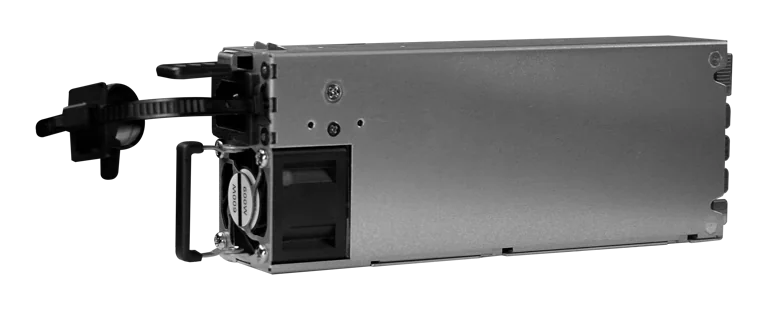
Buy MikroTik G1483-0600WNB in Kenya, a 600W hot-swappable 54.5V 10.35A power supply for the CRS320-8P-8B-4S+RM PoE++ switch, support
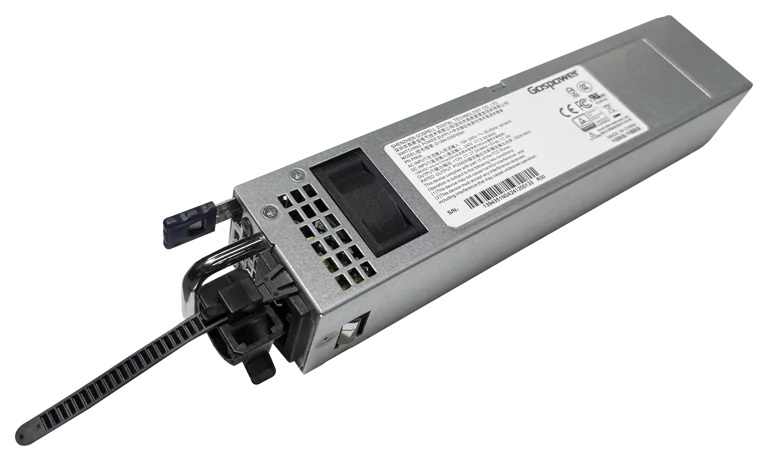
Buy MikroTik G1394-0350WNA in Kenya, a 350W hot-swappable 12V DC 27.5A AC power supply designed for the MikroTik CRS804 DDQ 400G swi
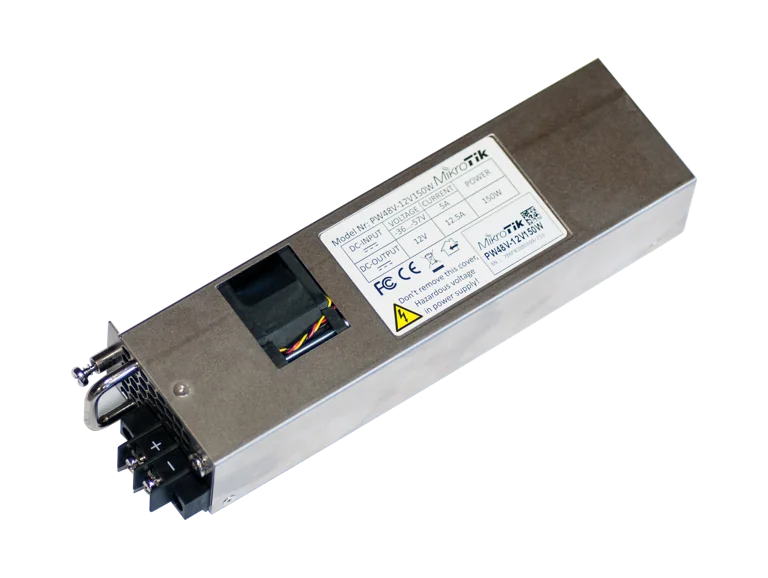
Buy MikroTik PW48V-12V150W in Kenya, a 150W hot-swappable -48V DC telecom power supply for CCR1072, CCR2216, CRS518 and CRS520 high-
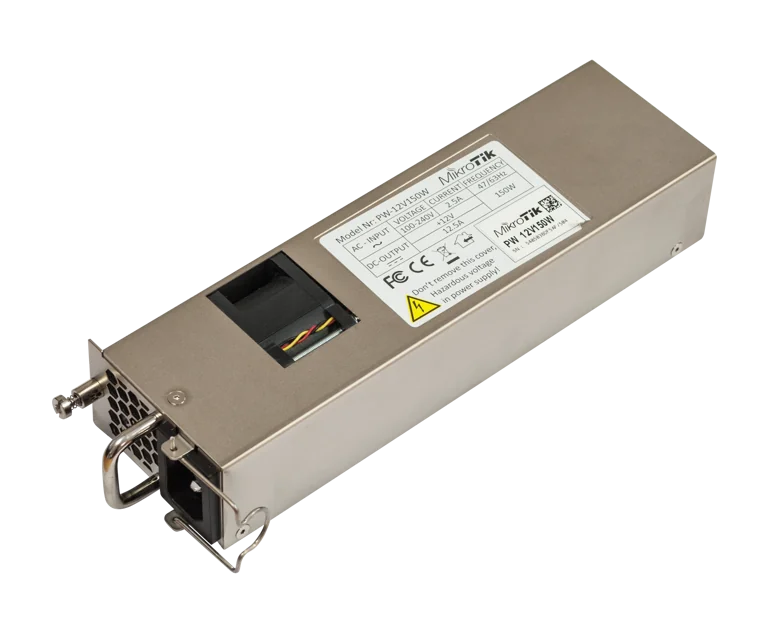
Buy MikroTik 12POW150 in Kenya, a 12V 150W hot-swap AC/DC power supply for CCR1072, CCR2216, CRS518 and CRS520 high-availability net