
MikroTik RB4011 vs RB5009
Compare MikroTik RB4011 vs RB5009 for performance, ports, 10G SFP+, 2.5G, ISP use, business networks and value to see which router is better.
MikroTik RB4011 vs RB5009
Which MikroTik Router Is Better: RB4011 or RB5009?
MikroTik RB4011 vs RB5009 | Which Router Is Better?
When comparing MikroTik RB4011 vs RB5009, both routers are excellent options for professional networking, but they are designed around slightly different priorities.
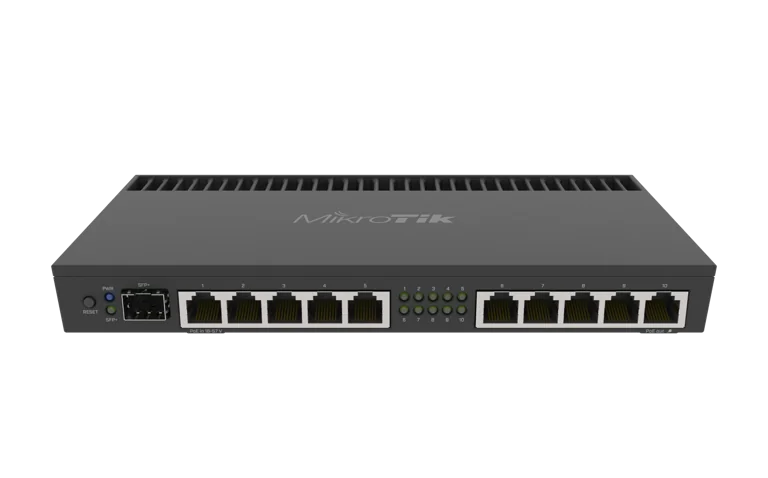
The MikroTik RB4011iGS+RM is known for its ten Gigabit Ethernet ports, 10G SFP+ interface, rackmount design and strong quad-core routing performance.
The MikroTik RB5009UG+S+IN is a newer platform with ARM64 architecture, 2.5 Gigabit Ethernet, 10G SFP+, USB 3.0 and a compact modern design.
For buyers in Kenya, the better option depends on whether you prioritize more physical Ethernet ports, newer architecture, 2.5G connectivity, rack installation or future upgrade potential.
You can view the MikroTik RB4011iGS+RM or browse more MikroTik products in Kenya.
MikroTik RB4011 vs RB5009 Quick Comparison
FeatureRB4011iGS+RMRB5009UG+S+INCPU ArchitectureARM 32-bitARM64CPU Cores44RAM1 GB1 GBGigabit Ethernet Ports1072.5G EthernetNoYesSFP+1 × 10G1 × 10GUSBNoUSB 3.0PoE InputYesYesPoE OutputYesDepending on model/port configurationRackmountYesOptional/compact rack optionsRouterOSRouterOS v7RouterOS v7Best ForPort-heavy professional networksNewer high-speed deploymentsBoth are powerful routers, but the RB5009 is the newer hardware platform.
RB4011 vs RB5009 Processing Performance
The RB4011 uses a quad-core ARM processor, while the RB5009 uses a newer ARM64 platform.
The newer architecture gives the RB5009 an advantage in modern RouterOS workloads and future software development.
The RB5009 is generally better suited to newer deployments that need:
higher processing efficiency
2.5G Ethernet
modern ARM64 support
USB 3.0
compact design
The RB4011 still provides strong performance for:
firewall rules
VLANs
PPPoE
bandwidth queues
VPN
multiple WAN connections
professional routing
For many existing business and ISP environments, RB4011 performance remains more than sufficient.
Ethernet Port Comparison
This is where the RB4011 has a clear advantage.
The RB4011 provides:
10 × Gigabit Ethernet ports
The RB5009 provides fewer standard Gigabit Ethernet ports but adds a 2.5G Ethernet interface.
If your network requires many physical Gigabit connections directly on the router, the RB4011 may be more convenient.
For example, a business could use separate RB4011 ports for:
WAN
backup WAN
office LAN
CCTV
servers
VoIP
management
access points
guest network
another network segment
With RB5009, you may need an external switch sooner.
2.5G Ethernet Advantage on RB5009
The RB5009 includes 2.5 Gigabit Ethernet.
This is an important advantage for modern networks.
2.5G can be useful for:
faster internet connections
high-speed switches
Wi-Fi 6 access points
local server connections
future-proofing
If your ISP connection exceeds 1 Gbps or you are building a network that may soon move beyond standard Gigabit speeds, RB5009 has a stronger modern connectivity profile.
10G SFP+ Comparison
Both the RB4011 and RB5009 include 10G SFP+ connectivity.
This makes both routers suitable for:
fibre uplinks
10G switches
ISP backbones
server networks
high-speed aggregation
For many professional users, this means either router can form part of a 10G network backbone.
USB Comparison
RB5009 has a clear advantage here.
It includes USB 3.0.
RB4011 does not include USB.
USB can be useful for:
storage
external LTE modem
RouterOS container storage
custom network applications
If USB functionality matters to your deployment, RB5009 is the better choice.
RB4011 vs RB5009 for ISPs
Both routers can be used by ISPs.
The better choice depends on the network.
RB4011 is attractive when you need:
many Gigabit Ethernet ports
rackmount installation
proven PPPoE performance
multiple physical network segments
RB5009 is attractive when you need:
newer hardware
2.5G Ethernet
ARM64
USB 3.0
modern upgrade potential
ISPs using MikroTik equipment can also use Tajira for billing and subscriber management.
RB4011 vs RB5009 for PPPoE
Both routers support PPPoE through RouterOS.
The important factors are not only the model but also:
subscriber count
bandwidth
queues
firewall rules
packet sizes
VPN usage
routing complexity
For larger PPPoE deployments, always evaluate real workload rather than relying only on CPU specifications.
RB4011 vs RB5009 for Business Networks
For business environments, both are strong options.
Choose RB4011 if you need:
many physical ports
rackmount installation
multiple LAN segments
simple structured cabling
Choose RB5009 if you need:
2.5G Ethernet
newer architecture
USB
more modern high-speed connectivity
For most businesses, either router can support:
VLANs
guest Wi-Fi
CCTV
VPN
multiple WANs
firewall policies
bandwidth management
RB4011 vs RB5009 for CCTV
CCTV installers may prefer RB4011 when more direct Ethernet interfaces are useful.
For example, different ports can be assigned to:
NVR
CCTV switch
office LAN
management
WAN
backup WAN
RB5009 can also manage CCTV networks effectively, but an external switch may be needed sooner.
Both support VLANs and firewall policies for isolating surveillance traffic.
VLAN Performance
Both routers support advanced VLAN configuration through RouterOS.
A typical setup could include:
VLAN 10 – Management
VLAN 20 – Staff
VLAN 30 – CCTV
VLAN 40 – Guest
VLAN 50 – Servers
The newer RB5009 hardware may offer stronger long-term performance potential, but RB4011 remains capable for many VLAN-heavy environments.
VPN Performance
Both routers support multiple VPN technologies through RouterOS.
RB5009's newer architecture can provide advantages for newer workloads.
RB4011 also has strong VPN capability and supports hardware IPsec acceleration.
Possible use cases include:
branch-to-branch VPN
remote employee access
CCTV remote access
technician management
Multi-WAN Comparison
Both routers can be configured for:
failover
load balancing
policy routing
multiple WAN links
For example:
WAN 1 – Fibre
WAN 2 – Starlink
WAN 3 – LTE
The RB4011's larger number of Ethernet ports can make multi-WAN configurations easier without requiring an external switch.
Rackmount Comparison
RB4011 is naturally strong here.
The RM version is designed for rack installation and includes rackmount accessories.
RB5009 is more compact and can also be installed in rack environments with the appropriate mounting options, but its design is more flexible and compact.
For traditional server racks, RB4011 may feel more straightforward.
Power Consumption
RB5009 is based on a newer hardware platform and is generally efficient for its performance.
RB4011 is also fanless and efficient enough for professional use.
Both are suitable for:
offices
server rooms
ISP racks
network cabinets
Noise
Both routers use passive cooling.
There are no internal fans.
This makes both suitable for quiet environments such as:
offices
home labs
small server rooms
RB4011 Advantages
The main RB4011 advantages are:
10 Gigabit Ethernet ports
10G SFP+
rackmount design
strong professional routing
proven RouterOS platform
useful for multi-WAN
good for port-heavy installations
RB4011 Disadvantages
The main limitations are:
older ARM architecture
no USB
no 2.5G Ethernet
newer alternatives exist
RB5009 Advantages
The RB5009 advantages include:
newer ARM64 architecture
2.5G Ethernet
10G SFP+
USB 3.0
compact design
strong future upgrade potential
RB5009 Disadvantages
The main limitations include:
fewer Gigabit Ethernet ports
may require external switching sooner
may cost more depending on supplier
Which Is Better for an ISP?
For a new ISP deployment, RB5009 is often the more future-oriented option because of its newer platform and faster interfaces.
However, RB4011 can still be better when:
you need ten direct Gigabit ports
you prefer a traditional rackmount design
your network is already designed around 1G Ethernet
For larger ISP deployments, consider moving beyond both to a MikroTik CCR model.
Which Is Better for Business?
For a medium-sized business:
Choose RB4011 if physical port count matters.
Choose RB5009 if future high-speed connectivity matters more.
Both can handle:
VLANs
VPN
firewall
guest Wi-Fi
CCTV
multiple WAN links
Which Is Better for Home Labs?
RB5009 is usually the more interesting home-lab option.
USB 3.0, 2.5G Ethernet and ARM64 architecture give enthusiasts more flexibility.
RB4011 is still attractive if you need many Ethernet ports.
Which One Is More Future-Proof?
RB5009 is generally more future-proof.
Reasons include:
newer architecture
2.5G Ethernet
USB 3.0
modern platform
RB4011 remains very capable, but the RB5009 better reflects current networking trends.
MikroTik RB4011 Price in Kenya
Customers comparing these routers should check the current MikroTik RB4011iGS+RM price in Kenya.
You can also browse MikroTik products in Kenya.
For additional market comparison, visit MikroTik router prices in Kenya or browse MikroTik products from Orbitlink Solutions.
Frequently Asked Questions
Is RB5009 better than RB4011?
RB5009 is newer and provides ARM64, 2.5G Ethernet and USB 3.0. RB4011 provides more Gigabit Ethernet ports and traditional rackmount flexibility.
Which router is better for an ISP?
Both can work well. RB5009 is generally better for newer deployments, while RB4011 may be more convenient when port count is important.
Does RB4011 have 10G?
Yes. It has one 10G SFP+ interface.
Does RB5009 have 10G?
Yes. RB5009 also includes a 10G SFP+ interface.
Does RB4011 have 2.5G?
No. Its Ethernet ports are Gigabit, although it has 10G SFP+.
Does RB5009 have 2.5G?
Yes. It includes a 2.5 Gigabit Ethernet interface.
Which has more Ethernet ports?
RB4011 provides ten Gigabit Ethernet ports, giving it the advantage in physical port count.
Which is better for VLANs?
Both support advanced VLAN configuration through RouterOS.
Which is better for CCTV?
RB4011 may be convenient where more direct Ethernet interfaces are needed. Both can manage CCTV VLANs and routing effectively.
Where can I buy RB4011 in Kenya?
You can view the MikroTik RB4011iGS+RM on MikroTik Kenya.
Final Verdict: RB4011 vs RB5009
The MikroTik RB5009 is generally the better choice for users building a new network and looking for a more modern platform.
It offers:
ARM64
2.5G Ethernet
USB 3.0
10G SFP+
However, the MikroTik RB4011iGS+RM remains extremely relevant because of:
ten Gigabit Ethernet ports
rackmount design
strong routing performance
10G SFP+
proven RouterOS capability
Choose RB4011 when port density and rackmount deployment are priorities.
Choose RB5009 when newer architecture and faster modern interfaces are more important.
Before buying, compare the current MikroTik RB4011iGS+RM price in Kenya with available RB5009 pricing and choose the model that best fits your network.