MikroTik Networking Solutions for Farms and Rural Businesses in Kenya
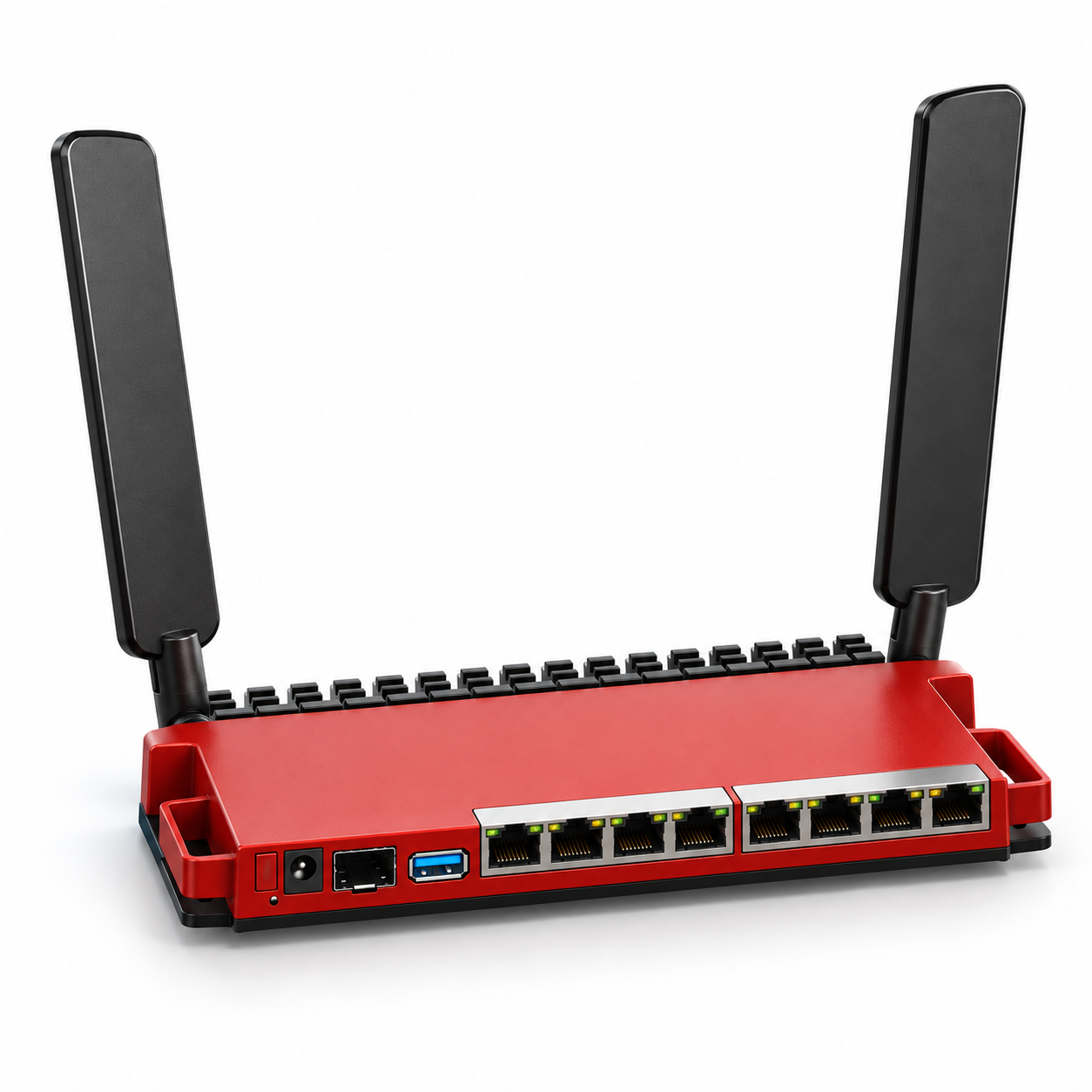
MikroTik rural internet solutions in Kenya provide farmers, agricultural enterprises, ranch owners and rural businesses with flexible networking infrastructure for reliable internet connectivity, security surveillance, business administration and remote equipment monitoring.
Many farms and rural businesses operate in locations where conventional fiber optic infrastructure is unavailable or expensive to install. Limited mobile network coverage, unreliable electricity and considerable distances between operational buildings can make establishing a reliable network particularly challenging.
However, these challenges should not prevent agricultural businesses from adopting modern technology.
By combining MikroTik routers, outdoor wireless devices, cellular networking equipment, satellite internet and suitable network distribution infrastructure, rural enterprises can establish professionally managed networks that support their daily operations.
At MikroTik Kenya, we help customers identify networking equipment suitable for agricultural facilities, remote businesses, commercial farms and rural residential properties.
This comprehensive guide explains how to establish reliable rural internet connectivity using MikroTik, select appropriate networking equipment, connect multiple farm buildings, install remote CCTV systems and develop a scalable agricultural network.
Why Reliable Internet Connectivity Is Important for Farms in Kenya
Modern agriculture increasingly depends on digital technologies to improve operational efficiency, manage resources and support business growth.
From monitoring livestock and managing inventory to processing payments and communicating with suppliers, reliable internet connectivity can improve how agricultural enterprises operate.
Digital Farm Management
Farm owners can use internet-connected management platforms to maintain records relating to crop production, livestock, employee activities, machinery maintenance and operating expenses.
A reliable MikroTik network allows authorized employees to access these systems from different operational locations.
Remote CCTV Surveillance
Agricultural businesses frequently manage extensive properties containing valuable machinery, livestock, harvested produce and operational equipment.
Internet-connected surveillance systems allow authorized farm owners and security personnel to monitor designated locations remotely.
MikroTik routers and outdoor wireless devices can help establish connectivity between remote cameras and centralized recording infrastructure.
Smart Irrigation and Agricultural Monitoring
Compatible agricultural monitoring systems can collect information about soil moisture, temperature, water levels and irrigation equipment.
Where these systems support network connectivity, MikroTik infrastructure can help transmit their information to centralized monitoring platforms.
Communication With Customers and Suppliers
Reliable internet connectivity supports communication with produce buyers, agricultural suppliers, transport companies and other business partners.
Farm managers can also access market information, receive orders, process payments and coordinate deliveries more efficiently.
Digital Financial Management
Agricultural enterprises can use cloud accounting applications, mobile banking, electronic invoicing and inventory management systems to monitor business performance.
Reliable connectivity reduces disruptions when accessing these services from remote locations.
Common Internet Connectivity Challenges in Rural Kenya
Before investing in networking equipment, farm owners should understand the challenges that can affect rural connectivity.
| Challenge | Recommended solution |
|---|---|
| Limited fiber optic coverage | Evaluate satellite or cellular internet |
| Weak mobile network signals | Install an outdoor directional LTE router |
| Long distances between buildings | Deploy point-to-point wireless links or fiber |
| Frequent electricity interruptions | Install UPS or solar backup systems |
| Poor outdoor Wi-Fi coverage | Use weather-resistant access points |
| Limited upload bandwidth | Prioritize essential business and CCTV traffic |
| Unauthorized network access | Implement firewall rules and network segmentation |
| Difficult remote maintenance | Configure secure VPN-based administration |
| Lightning and electrical surges | Install appropriate grounding and surge protection |
| Expensive infrastructure expansion | Develop a phased networking deployment plan |
MikroTik rural internet solutions in Kenya can address many of these challenges through a combination of suitable hardware, network planning and RouterOS configuration.
Best Internet Connectivity Options for Farms in Kenya
The first step in establishing a reliable rural network is selecting an appropriate upstream internet connection.
MikroTik equipment can integrate with several internet technologies, allowing agricultural businesses to choose solutions according to their location and operational requirements.
1. Starlink Satellite Internet
Starlink is worth considering for agricultural properties located outside established terrestrial broadband coverage areas.
A farm can install a Starlink terminal at a suitable location and connect it to a MikroTik router responsible for managing the local network.
MikroTik can then distribute internet connectivity to offices, residential buildings, storage facilities and other operational areas.
Potential advantages include:
-
Connectivity in remote areas where the service is available.
-
Reduced dependence on nearby mobile network infrastructure.
-
Support for cloud-based business applications.
-
Compatibility with Ethernet-based networking equipment.
-
Integration with additional internet connections for redundancy.
Farm owners can explore Starlink equipment and installation options through Starlink Kenya and Spacelink Kenya.
Before installation, confirm service availability, subscription conditions, equipment compatibility and unobstructed sky visibility.
2. 4G LTE Internet Connectivity
Where suitable mobile network coverage exists, MikroTik LTE routers can provide an alternative to satellite or fiber connectivity.
Outdoor cellular routers are particularly useful in rural locations where mobile signals may be weaker inside buildings.
MikroTik offers several outdoor LTE products, including the LHG LTE18 and ATL LTE18 kits, which combine cellular modems with directional antenna systems.
ATL LTE18 kit+1
Farm owners should test available mobile network providers before purchasing equipment. Signal strength and network congestion may vary considerably between neighboring properties.
3. 5G Internet Connectivity
Where compatible 5G coverage is available, advanced cellular routers can provide additional internet capacity for demanding applications.
The MikroTik ATL 5G R16 is an example of an outdoor cellular router designed for advanced 5G connectivity.
However, purchasing 5G equipment does not guarantee access to a 5G network. The selected hardware, mobile subscription and local network must be compatible.
4. Wireless Internet Service Providers
Some rural areas are served by wireless internet service providers that deliver connectivity through fixed outdoor wireless equipment.
A MikroTik router can manage the connection supplied by such a provider and distribute internet access throughout the farm.
When selecting a wireless provider, evaluate available bandwidth, reliability, installation costs, technical support and applicable service conditions.
5. Fiber Optic Internet
Where fiber optic connectivity is available, it can provide an excellent primary internet connection for commercial farms and agricultural processing facilities.
Fiber is especially attractive for enterprises that require substantial upload bandwidth, cloud backups, centralized CCTV monitoring and reliable business communication.
Comparing Rural Internet Connectivity Options
| Feature | Satellite | 4G LTE | 5G | Fixed wireless | Fiber |
|---|---|---|---|---|---|
| Availability | Service area dependent | Mobile coverage dependent | Coverage dependent | Provider dependent | Infrastructure dependent |
| Remote farm suitability | High | High where signal exists | Location dependent | Good where available | Limited by infrastructure |
| External antenna requirements | Satellite terminal | Model dependent | Model dependent | Usually required | No |
| Installation complexity | Moderate | Low to moderate | Low to moderate | Moderate | Infrastructure dependent |
| Backup internet suitability | Excellent | Excellent | Excellent | Good | Good |
| Main limitation | Sky visibility and service conditions | Signal and congestion | Coverage and equipment cost | Line of sight | Infrastructure availability |
There is no single internet technology that is best for every rural property. A professional connectivity assessment should guide the final decision.
Recommended MikroTik Network Architecture for Farms
A professionally designed farm network should separate internet reception, network management, distribution and end-user connectivity.
The central MikroTik router manages internet traffic and network security. Outdoor wireless bridges or fiber connections extend connectivity to remote farm buildings, while access points provide local wireless coverage.
This modular design allows businesses to expand their network as additional operational facilities are introduced.
Best MikroTik Equipment for Farms and Rural Businesses in Kenya
1. MikroTik LHG LTE18 Kit
The MikroTik LHG LTE18 kit is designed for outdoor cellular connectivity in locations requiring high-gain directional reception.
It is particularly useful for farms situated far from mobile network base stations.
| Specification | Details |
|---|---|
| Mobile technology | LTE Category 18 |
| Theoretical LTE download | Up to 1.2 Gbps |
| Theoretical LTE upload | Up to 150 Mbps |
| Integrated antenna gain | 17 dBi |
| Ethernet interface | Gigabit Ethernet |
| Installation | Outdoor |
| Operating system | RouterOS |
Its directional antenna can help improve reception where suitable cellular signals exist. However, it cannot create mobile coverage in locations where no usable signal is available.
LHG LTE18 kit
2. MikroTik ATL LTE18 Kit
The MikroTik ATL LTE18 kit is an advanced outdoor cellular networking solution suitable for rural businesses requiring reliable 4G connectivity.
It features a Category 18 LTE modem, 4×4 downlink MIMO support and Gigabit Ethernet connectivity.
Farm owners can mount the device outdoors and connect it to an indoor MikroTik router or network switch.
Potential applications include agricultural offices, remote dairy facilities, rural residential properties and construction sites.
ATL LTE18 kit
3. MikroTik ATL 5G R16
The MikroTik ATL 5G R16 is suitable for advanced outdoor cellular deployments where compatible 5G or LTE coverage exists.
Its Release 16 cellular modem and LTE Category 20 capabilities provide an advanced platform for rural broadband connectivity.
The outdoor enclosure makes it suitable for installations requiring better cellular reception than an indoor router can achieve.
Before purchasing, confirm the exact modem variant and compatibility with the intended Kenyan mobile network.
ATL 5G R16
4. MikroTik RB5009UG+S+IN
The MikroTik RB5009UG+S+IN is an excellent core router to evaluate for growing agricultural networks.
It can manage multiple internet connections, network segmentation, bandwidth allocation, VPN connectivity and security policies.
| Specification | Details |
|---|---|
| Processor architecture | ARM64 |
| Processor | Quad-core |
| RAM | 1 GB |
| Gigabit Ethernet ports | 7 |
| 2.5 Gigabit Ethernet ports | 1 |
| 10G SFP+ interface | 1 |
| RouterOS license | Level 5 |
| Integrated Wi-Fi | No |
| Integrated cellular modem | No |
The RB5009 can operate as the central networking device for a farm using Starlink, an outdoor LTE gateway or another broadband connection.
It is available for consideration through:
5. MikroTik RB4011iGS+RM
The MikroTik RB4011iGS+RM provides ten Gigabit Ethernet interfaces and a 10G SFP+ interface.
It is suitable for agricultural enterprises that require multiple wired connections between switches, offices, surveillance equipment and other network devices.
Its rackmount construction makes it useful for structured farm networking installations.
6. MikroTik LHG XL 5 ac
The MikroTik LHG XL 5 ac is a directional 5 GHz wireless networking device designed for outdoor connectivity.
Its integrated 27 dBi antenna makes it worth evaluating for farm building-to-building wireless links.
Unlike the LHG LTE18, which connects to mobile network infrastructure, the LHG XL 5 ac establishes wireless data connections with compatible networking equipment.
This distinction is important when purchasing equipment for a rural property.
A pair of appropriately configured devices can connect a farm office to a remote warehouse, dairy facility or security post, subject to suitable transmission conditions.
LHG XL 5 ac
7. MikroTik wAP ax
The MikroTik wAP ax provides dual-band Wi-Fi 6 connectivity in a weather-resistant enclosure.
It is useful for covered outdoor working areas, staff facilities, courtyards and agricultural buildings requiring local wireless coverage.
The wAP ax is designed to provide Wi-Fi access to client devices. It should not be confused with a dedicated long-distance directional wireless bridge.
8. MikroTik CCR2004 Cloud Core Router
Larger agricultural enterprises with extensive networking infrastructure may consider the MikroTik CCR2004-1G-12S+2XS Cloud Core Router.
Its extensive optical connectivity makes it suitable for evaluating high-capacity fiber backbone networks serving multiple processing facilities, warehouses and administrative buildings.
MikroTik Equipment Comparison for Rural Networks
| Product | Primary function | Recommended farm application |
|---|---|---|
| LHG LTE18 kit | Outdoor cellular gateway | Remote farms with weak LTE reception |
| ATL LTE18 kit | Advanced outdoor LTE | Farm offices and rural businesses |
| ATL 5G R16 | Outdoor cellular gateway | Advanced 5G and LTE installations |
| RB5009UG+S+IN | Core router | Centralized network administration |
| RB4011iGS+RM | Wired router | Farms requiring multiple Ethernet connections |
| LHG XL 5 ac | Directional wireless link | Connecting remote farm buildings |
| wAP ax | Wireless access point | Local outdoor Wi-Fi |
| CCR2004 | Enterprise core router | Large agricultural processing networks |
Selecting equipment according to its intended function helps prevent unnecessary expenditure and improves long-term network reliability.
How to Set Up MikroTik Internet Connectivity on a Farm in Kenya
Establishing reliable MikroTik rural internet solutions in Kenya requires a structured installation process that considers both immediate connectivity needs and future business expansion.
Step 1: Conduct a Farm Networking Site Survey
Before purchasing equipment, assess the physical layout of the property and identify every location requiring internet connectivity.
A professional site survey should establish the following:
-
Total geographical area of the property.
-
Distance between operational buildings.
-
Available mobile network coverage.
-
Suitable satellite terminal installation locations.
-
Existing electrical infrastructure.
-
Potential wireless signal obstructions.
-
Locations requiring CCTV surveillance.
-
Number of employees and connected devices.
-
Existing network infrastructure.
-
Future agricultural expansion plans.
For example, a commercial farm may require internet connectivity at its administrative office, dairy unit, produce warehouse, irrigation pump house and security entrance.
Identifying these requirements before installation helps establish a more accurate equipment budget.
Step 2: Install the Primary Internet Connection
Choose an appropriate upstream connection based on the site survey.
For properties with reliable mobile coverage, an outdoor MikroTik LTE router may provide sufficient connectivity.
Where terrestrial broadband is unavailable, Starlink may provide a suitable alternative.
The primary internet connection should terminate at a secure central location with reliable electricity and suitable equipment protection.
Step 3: Configure the MikroTik Core Router
Install a MikroTik core router such as the RB5009 or RB4011 to manage the farm’s network.
The router should provide the necessary internet routing, firewall security, DHCP services, bandwidth management and network segmentation.
The core router should also accommodate future network expansion without requiring unnecessary infrastructure replacement.
Step 4: Connect Remote Farm Buildings
Depending on the distance and environmental conditions, remote facilities can be connected using outdoor Ethernet cabling, point-to-point wireless links or fiber optic infrastructure.
Standard copper Ethernet channels are generally limited to 100 meters under conventional structured cabling standards. For greater distances, consider fiber optic connections or professionally engineered wireless links.
Fiber is particularly attractive between buildings because it can provide electrical isolation and reduce exposure to certain inter-building electrical surge risks.
Step 5: Install Local Wireless Access Points
Once connectivity reaches each operational building, install suitable wireless access points.
Access point placement should consider building materials, equipment interference, employee working areas and the expected number of connected devices.
Outdoor access points should have appropriate environmental protection for their installation conditions.
Step 6: Configure Network Segmentation
Separate different categories of network traffic to improve security and administrative control.
For example, CCTV cameras should not necessarily share unrestricted network access with employee smartphones, guest devices or business accounting computers.
Step 7: Install Backup Power
Rural properties may experience power interruptions that affect internet equipment, surveillance systems and remote monitoring infrastructure.
Install suitable backup power systems for critical networking devices.
The backup system should support the core router, internet gateway, essential switches and any critical remote networking equipment.
Step 8: Test and Document the Network
Verify internet connectivity, wireless coverage, CCTV performance, security policies and backup power functionality before completing the installation.
Maintain a network diagram, equipment inventory, configuration backups and technical support information.
How to Connect Buildings Across a Large Farm Using MikroTik
Large agricultural properties often contain buildings separated by hundreds of meters or several kilometers.
Running individual internet subscriptions to every building may increase operational expenses and complicate network administration.
MikroTik point-to-point wireless equipment provides an alternative where appropriate transmission paths exist.
Example Farm Wireless Distribution Network
Consider an illustrative commercial farm with the following facilities:
| Facility | Distance from main office | Connectivity requirement |
|---|---|---|
| Administrative office | Central location | Internet and business systems |
| Dairy milking facility | 350 m | Monitoring and operational records |
| Produce warehouse | 800 m | CCTV and inventory systems |
| Irrigation pump house | 1.5 km | Remote monitoring |
| Livestock management facility | 2 km | CCTV and employee connectivity |
| Main security gate | 600 m | Surveillance and access control |
A network engineer can evaluate dedicated point-to-point links between the central office and individual remote buildings.
Alternatively, an appropriately designed point-to-multipoint wireless system may serve several locations from a central distribution point.
Wireless equipment must be selected according to actual bandwidth requirements and environmental conditions.
How to Install CCTV Cameras on Remote Farms Using MikroTik
Security is an important consideration for agricultural businesses managing valuable livestock, machinery, fuel storage facilities and harvested produce.
MikroTik rural internet solutions in Kenya can support IP-based CCTV infrastructure across geographically distributed properties.
Recommended Farm CCTV Architecture
A typical agricultural surveillance network may include:
-
IP security cameras.
-
Network video recorder (NVR).
-
Managed PoE switches.
-
Outdoor wireless bridges.
-
MikroTik core router.
-
Backup power equipment.
-
Secure remote viewing functionality.
Cameras installed at remote buildings can transmit video footage through wireless or fiber connections to a centralized recording system.
This allows authorized personnel to monitor multiple locations from a single control point.
Calculating CCTV Bandwidth Requirements
CCTV bandwidth depends on camera resolution, frame rate, compression format, scene complexity and configured recording quality.
The following example assumes that each camera produces an average video stream of 4 Mbps.
| Number of cameras | Bandwidth per camera | Total video traffic |
|---|---|---|
| 4 | 4 Mbps | 16 Mbps |
| 8 | 4 Mbps | 32 Mbps |
| 12 | 4 Mbps | 48 Mbps |
| 16 | 4 Mbps | 64 Mbps |
| 24 | 4 Mbps | 96 Mbps |
| 32 | 4 Mbps | 128 Mbps |
Farm CCTV Bandwidth Calculator
16
25%
64 Mbps
80 Mbps
Estimated internal network capacity only. Actual camera bitrates fluctuate. Local recording does not necessarily consume equivalent upstream internet bandwidth.
A properly designed CCTV network should prioritize reliable internal recording even when the primary internet connection becomes unavailable.
Remote viewing can then use available internet bandwidth without requiring every camera to continuously upload its full-resolution stream to an external location.
Using MikroTik for Smart Irrigation and Agricultural IoT Systems
Modern agricultural enterprises can use Internet of Things (IoT) devices to monitor environmental conditions and improve resource management.
MikroTik networking infrastructure can provide connectivity for compatible agricultural monitoring gateways and control systems.
Potential applications include:
| Agricultural application | Monitoring capability |
|---|---|
| Smart irrigation | Soil moisture and irrigation status |
| Water storage | Tank water levels |
| Greenhouse management | Temperature and humidity |
| Dairy farming | Equipment and environmental monitoring |
| Weather monitoring | Rainfall and temperature measurements |
| Cold storage | Temperature alerts |
| Solar power systems | Energy production and battery monitoring |
| Livestock management | Compatible tracking gateway connectivity |
| Agricultural processing | Equipment status reporting |
Different agricultural sensors use different communication technologies. Some support Ethernet or Wi-Fi, while others require cellular, LoRaWAN or specialized gateways.
A MikroTik router provides the networking infrastructure but does not independently perform irrigation control, livestock tracking or environmental sensing.
Critical agricultural control systems should also retain appropriate local operation and safety mechanisms if internet connectivity becomes unavailable.
How to Configure Internet Failover Using MikroTik on a Farm
A farm that depends on internet connectivity for business operations may benefit from two independent internet connections.
For example, Starlink can serve as the primary connection while an outdoor LTE router provides backup connectivity.
MikroTik RouterOS supports multiple internet routes, allowing administrators to configure automatic failover.
Illustrative Farm Failover Configuration
| Connection | MikroTik interface | Role |
|---|---|---|
| Starlink internet | ether1 | Primary WAN |
| External LTE gateway | ether2 | Secondary WAN |
| Farm distribution network | LAN bridge | Internal connectivity |
For a simple deployment where both upstream connections provide IP addresses through DHCP, an illustrative configuration is:
/ip dhcp-client
add interface=ether1 add-default-route=yes \
    default-route-distance=1 use-peer-dns=no

add interface=ether2 add-default-route=yes \
    default-route-distance=2 use-peer-dns=no
The lower route distance gives the primary connection preference when both routes are available.
However, this basic configuration primarily addresses route availability. It may not detect every upstream internet outage when the gateway remains reachable.
More advanced deployments should implement recursive routing or another suitable internet reachability monitoring mechanism.
Existing DHCP clients, interface lists, firewall rules and NAT settings must be reviewed before applying these commands.
For additional guidance, consult the official MikroTik RouterOS documentation.
How to Separate Farm Networks Using MikroTik VLANs
Agricultural businesses often operate several categories of connected devices with different security requirements.
MikroTik VLAN configuration allows administrators to separate these devices logically while using shared physical network infrastructure.
Recommended Farm VLAN Structure
| VLAN ID | Network | Example IP subnet |
|---|---|---|
| 10 | Farm administration | 192.168.10.0/24 |
| 20 | CCTV surveillance | 192.168.20.0/24 |
| 30 | Agricultural IoT | 192.168.30.0/24 |
| 40 | Staff Wi-Fi | 192.168.40.0/24 |
| 50 | Guest Wi-Fi | 192.168.50.0/24 |
| 60 | Processing equipment | 192.168.60.0/24 |
| 99 | Network management | 192.168.99.0/24 |
This structure allows administrators to establish different firewall policies for each network.
For example, visitors can be permitted to access the internet without accessing CCTV cameras, agricultural monitoring devices or company financial records.
Similarly, IoT devices can be restricted to communicating with their authorized management systems.
Network segmentation should be supported by properly configured switches, access points and firewall rules.
How to Provide Remote Access to Farm Networks Using WireGuard
Farm owners frequently need to access their business systems while traveling or working from another location.
MikroTik WireGuard VPN provides a secure method of connecting authorized remote users to designated agricultural network resources.
Potential applications include remotely viewing CCTV cameras, accessing farm management software, monitoring connected equipment and administering networking devices.
Unlike directly forwarding administrative ports to the public internet, a properly configured VPN allows administrators to restrict remote access to authenticated users.
Farms using mobile broadband or satellite services behind carrier-grade NAT may require a publicly reachable VPN endpoint or cloud-hosted MikroTik router.
This allows the farm router to initiate an outbound encrypted connection even when incoming public connections are restricted.
Solar-Powered MikroTik Networking Solutions for Remote Farms
Many rural businesses operate in areas where electricity supply is unreliable or unavailable at certain locations.
Solar-powered networking infrastructure can provide connectivity to remote security cameras, agricultural monitoring systems and wireless distribution equipment.
A typical solar-powered network installation includes solar panels, a compatible charge controller, battery storage, suitable power conversion equipment and networking devices.
Example Remote Networking Power Consumption
| Device | Illustrative average consumption |
|---|---|
| Outdoor MikroTik cellular router | 8 W |
| Wireless bridge | 8 W |
| Four IP cameras | 24 W |
| Network switch | 10 W |
| Combined average load | 50 W |
A continuous 50 W load consumes approximately 1.2 kWh per day, before accounting for electrical conversion losses.
Rural Networking Backup Power Calculator
24 hours
1.20 kWh
139 Ah
Assumes 90% power delivery efficiency. This is a preliminary battery estimate, not a complete solar system design. Solar generation, battery chemistry, aging, peak loads and weather conditions require separate assessment.
For critical agricultural installations, solar and battery systems should be professionally sized according to actual equipment consumption and required operational availability.
MikroTik Networking Solutions for Different Agricultural Businesses
Dairy Farms
Dairy farms can use MikroTik networks to connect milking parlors, milk cooling facilities, administrative offices and livestock monitoring systems.
Reliable connectivity can support production records, inventory management, CCTV surveillance and compatible equipment monitoring platforms.
Poultry Farms
Poultry businesses can establish network infrastructure for environmental monitoring, security cameras, feed management systems and administrative operations.
Separate networks can protect connected monitoring equipment from unauthorized access.
Commercial Greenhouses
Greenhouse operators can use compatible network-connected monitoring systems to track temperature, humidity, irrigation conditions and equipment performance.
Outdoor wireless links can connect multiple greenhouse facilities to a central monitoring location.
Coffee and Tea Estates
Large agricultural estates often operate collection points, processing facilities, warehouses and administrative offices across extensive properties.
MikroTik wireless networking and fiber infrastructure can provide connectivity between these operational locations.
Livestock Ranches
Ranches can use MikroTik infrastructure to connect livestock management facilities, veterinary stations, storage buildings and security posts.
Solar-powered networking installations may be particularly useful at locations far from conventional electricity infrastructure.
Agricultural Processing Facilities
Agricultural processors can use MikroTik routers and managed switches to connect production offices, inventory systems, packaging departments, CCTV infrastructure and dispatch facilities.
Businesses with demanding high-speed backbone requirements can evaluate enterprise networking equipment such as the CCR2004.
Rural Hotels and Lodges
Hospitality businesses located near agricultural properties, wildlife conservancies and remote attractions can use MikroTik networking solutions to provide guest internet access, staff connectivity and secure business networks.
Where authorized paid Wi-Fi access is offered, compatible subscriber management solutions can help automate authentication and payment processing.
How Much Does It Cost to Install MikroTik Networking on a Farm in Kenya?
The cost of establishing MikroTik rural internet solutions in Kenya depends on the size of the property, number of buildings, internet technology and installation complexity.
Example Networking Budget for a Medium-Sized Farm
| Equipment or service | Illustrative cost |
|---|---|
| MikroTik core router | KSh 35,000 |
| Outdoor LTE router | KSh 40,000 |
| Two point-to-point wireless links | KSh 60,000 |
| Managed PoE switch | KSh 30,000 |
| Three wireless access points | KSh 36,000 |
| Outdoor Ethernet cables | KSh 20,000 |
| Mounting equipment | KSh 15,000 |
| Surge protection and grounding allowance | KSh 12,000 |
| Network cabinet | KSh 10,000 |
| Backup power system | KSh 25,000 |
| Installation and configuration | KSh 35,000 |
| Site survey and network planning | KSh 12,000 |
| Estimated total | KSh 330,000 |
KSh 0KSh 20KKSh 40KKSh 60KKSh 80KWireless linksOutdoor LTE routerAccess pointsCore routerInstallationPoE switchBackup powerCablingMounting equipmentSurge protectionSite surveyNetwork cabinet
These figures represent a hypothetical equipment and installation budget rather than verified current market prices.
Starlink equipment, CCTV cameras, internet subscriptions, comprehensive solar installations, applicable taxes and regulatory charges are excluded.
Smaller agricultural businesses can begin with basic connectivity and gradually introduce wireless links, additional access points and surveillance infrastructure.
Common Rural Networking Problems and Their Solutions
| Problem | Possible cause | Recommended solution |
|---|---|---|
| Weak cellular internet | Poor mobile reception | Install a suitable outdoor LTE antenna system |
| Slow satellite internet | Obstructions or network conditions | Review terminal location and service performance |
| Intermittent wireless links | Poor alignment or interference | Conduct a wireless link assessment |
| CCTV footage interruptions | Insufficient internal bandwidth | Upgrade network distribution capacity |
| Frequent equipment restarts | Unstable electrical supply | Install suitable backup power |
| Damaged outdoor cables | Weather exposure | Use outdoor-rated cabling |
| Poor farm-wide Wi-Fi coverage | Insufficient access point placement | Conduct a coverage survey |
| Unauthorized network access | Weak authentication | Strengthen firewall and access policies |
| Remote viewing unavailable | CGNAT or incorrect routing | Configure a suitable VPN architecture |
| Seasonal signal deterioration | Vegetation obstructing wireless paths | Reassess Fresnel zone clearance |
| High mobile data consumption | Continuous cloud uploads | Evaluate local recording and traffic management |
Regular network monitoring can help farm operators identify these problems before they cause extended operational interruptions.
Legal Considerations for Rural Wireless Networking in Kenya
Businesses installing outdoor wireless infrastructure should comply with applicable Kenyan telecommunications and equipment regulations.
The Communications Authority of Kenya regulates radio frequency usage, communications equipment approval and telecommunications services.
Outdoor point-to-point and point-to-multipoint installations may have specific authorization requirements depending on their frequencies, transmission parameters and applications.
Communications Authority of Kenya+1
Farm owners intending to provide commercial internet services to neighboring businesses, employees or members of the public should also confirm applicable telecommunications licensing and upstream service conditions.
Visit the Communications Authority of Kenya licensing procedures for additional regulatory information.
Best Practices for Maintaining Rural MikroTik Networks
Rural networking equipment may be exposed to dust, humidity, wind, electrical storms and other challenging environmental conditions.
A structured maintenance program can help preserve network reliability.
| Maintenance activity | Suggested frequency |
|---|---|
| Internet availability monitoring | Continuous |
| Cellular signal assessment | Weekly or automated |
| Wireless link performance review | Monthly |
| Router configuration backup | After significant changes |
| Outdoor equipment inspection | Quarterly |
| Backup battery performance testing | Quarterly |
| RouterOS security update assessment | Monthly |
| Vegetation and obstruction inspection | Seasonally |
| Electrical protection inspection | Periodically and after severe storms |
| Network documentation review | After infrastructure changes |
Protect networking equipment from unauthorized physical access and maintain secure copies of important RouterOS configurations.
Where to Buy MikroTik Equipment for Farms and Rural Businesses in Kenya
At MikroTik Kenya, we provide networking equipment suitable for agricultural enterprises, rural businesses, residential properties and professional internet connectivity projects.
Whether you require outdoor LTE equipment, wireless bridges, enterprise routers or network distribution accessories, selecting the correct equipment is important for long-term reliability.
Customers establishing extended rural Ethernet installations can also evaluate the MikroTik GPeR Gigabit Passive Ethernet Repeater where supported cable designs and installation conditions make it appropriate.
For more advanced routing applications, customers can explore MikroTik RB5009, RB4011 and Cloud Core Router solutions.
When requesting equipment recommendations, provide information about your property location, existing internet connection, distance between buildings, available electricity and expected networking applications.
This information helps identify a solution aligned with your agricultural business requirements.
Frequently Asked Questions
1. Which MikroTik router is best for rural internet in Kenya?
The MikroTik LHG LTE18 and ATL LTE18 kits are worth considering for outdoor cellular connectivity. The RB5009UG+S+IN is suitable for centralized routing when connected to an external internet gateway.
2. Can I use Starlink and MikroTik together on a farm?
Yes. A compatible Starlink installation can provide upstream internet connectivity while a MikroTik router manages network distribution, bandwidth allocation, security and backup internet connections.
3. Can MikroTik provide Wi-Fi coverage across an entire farm?
Yes, through appropriately designed network infrastructure combining outdoor wireless bridges, fiber connections and local wireless access points. A single conventional Wi-Fi router is generally insufficient for covering a large agricultural property.
4. Can MikroTik connect farm buildings several kilometers apart?
Yes. Compatible directional wireless equipment can establish long-distance connections where the transmission path, link budget and regulatory conditions are suitable. Actual performance must be assessed through professional network planning.
5. Can I install solar-powered MikroTik equipment?
Yes. Many MikroTik devices can operate from compatible DC or PoE power systems supplied by appropriately designed solar and battery infrastructure.
6. Can MikroTik help monitor farm irrigation systems?
MikroTik equipment can provide network connectivity for compatible irrigation monitoring and control systems. Specialized agricultural sensors, controllers and gateways are required to perform the actual monitoring and control functions.
7. Can I view farm CCTV cameras from Nairobi?
Yes. A properly configured CCTV network with secure remote access can allow authorized users to view cameras from Nairobi or other locations. A WireGuard VPN or another appropriate remote access solution may be required.
8. Can I install MikroTik internet on a farm without mobile network coverage?
Potentially. Satellite internet or a professionally engineered wireless connection from another location may provide connectivity where mobile broadband is unavailable. MikroTik equipment can then manage the local network.
Conclusion
MikroTik rural internet solutions in Kenya provide agricultural enterprises with flexible networking infrastructure capable of supporting modern business operations, security surveillance, remote monitoring and digital farm management.
By combining suitable internet connectivity with MikroTik routers, directional wireless equipment, outdoor access points and backup power systems, farmers can establish reliable networks across geographically distributed properties.
Whether you operate a dairy farm in Nyandarua, a livestock ranch in Laikipia, a greenhouse business in Naivasha, a tea estate in Kericho or an agricultural processing facility in another part of Kenya, the right network design can support your operational requirements.
Successful agricultural networking begins with understanding the property’s connectivity challenges, selecting appropriate equipment and implementing professional security and maintenance practices.
Visit MikroTik Kenya today to explore networking equipment for farms, ranches, rural businesses and remote agricultural facilities.
