
MikroTik RB4011 for ISP
Learn how MikroTik RB4011 works for ISPs, including PPPoE, bandwidth management, VLANs, multi-WAN, firewall, RADIUS and subscriber networks.
MikroTik RB4011 for ISP
Is the MikroTik RB4011 Good for an ISP?
MikroTik RB4011 for ISP | PPPoE, Bandwidth & VLAN Guide
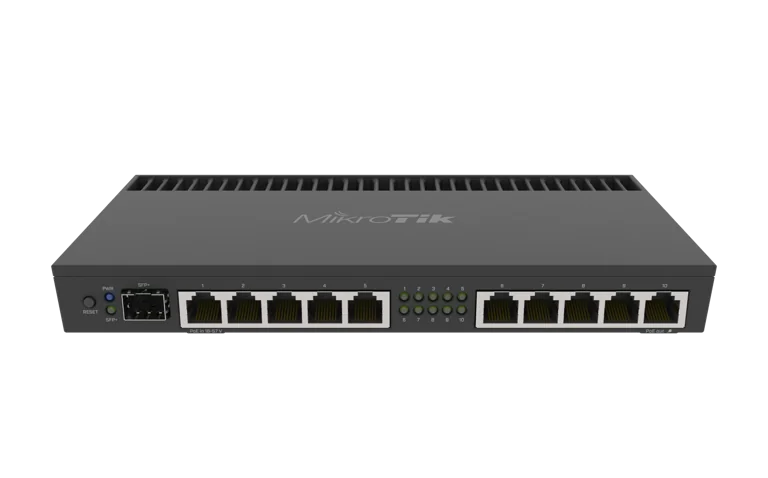
The MikroTik RB4011iGS+RM is a popular professional router for small and medium-sized Internet Service Providers because it combines strong routing performance, ten Gigabit Ethernet ports, a 10G SFP+ interface and the flexibility of RouterOS.
For Kenyan ISPs, WISPs, apartment internet providers and hotspot operators, the RB4011 can be used for PPPoE, bandwidth management, VLANs, firewall policies, multiple WAN connections, VPNs and subscriber traffic management.
You can view the MikroTik RB4011iGS+RM or browse other MikroTik products in Kenya.
Is the MikroTik RB4011 Good for an ISP?
Yes. The RB4011 can be a strong option for an ISP when the network size, bandwidth and subscriber load are within the router's capabilities.
The router is particularly useful for smaller and medium-sized deployments that need:
PPPoE
subscriber authentication
bandwidth queues
VLANs
firewall rules
routing
multiple WAN connections
hotspot services
VPN
network monitoring
The exact number of users the RB4011 can support depends heavily on the configuration rather than one fixed customer limit.
Factors such as packet size, queues, firewall rules and encrypted traffic all affect performance.
Why ISPs Use MikroTik
MikroTik routers are widely used by ISPs because RouterOS includes many tools that would otherwise require several separate systems.
An ISP can use MikroTik for:
PPPoE
hotspot
VLAN management
bandwidth control
routing
firewall
DHCP
NAT
VPN
multi-WAN
failover
traffic monitoring
This makes MikroTik attractive to ISPs that want flexibility and detailed control over their network.
RB4011 Hardware for ISP Networks
The RB4011 includes several features that make it useful in ISP environments.
These include:
quad-core ARM processor
1 GB RAM
10 Gigabit Ethernet ports
1 × 10G SFP+ interface
RouterOS v7
RouterOS Level 5 licence
Passive PoE
rackmount design
fanless operation
The 10G SFP+ interface is particularly useful for connecting the router to:
fibre uplinks
core switches
aggregation switches
backbone networks
RB4011 for PPPoE
PPPoE is commonly used by ISPs to authenticate subscribers.
The RB4011 can manage PPPoE users through RouterOS.
An ISP can configure:
PPPoE server
user profiles
IP pools
subscriber usernames
passwords
bandwidth limits
DNS
firewall policies
For smaller deployments, customers can be created directly under:
PPP → Secrets
For larger networks, centralized authentication such as RADIUS is usually easier to manage.
Using Tajira With MikroTik RB4011
For ISPs, the network router is only one part of the operation.
You also need to manage:
customers
packages
billing
renewals
payments
subscriber records
Tajira can be used as an ISP billing and subscriber-management platform alongside MikroTik infrastructure.
A typical workflow can look like this:
Tajira → customer and billing management
RB4011 → routing, PPPoE and bandwidth enforcement
This allows the ISP to separate the business-management side from the network-routing side.
Bandwidth Management
One of the most important ISP functions is bandwidth control.
RouterOS includes tools such as:
Simple Queues
Queue Tree
PCQ
PPP profiles
For example, an ISP may offer packages such as:
5 Mbps
10 Mbps
20 Mbps
30 Mbps
50 Mbps
100 Mbps
Each subscriber can be assigned a profile according to the package they purchased.
VLAN Management
VLANs are very important for ISPs.
They can be used to separate:
management traffic
customer traffic
backbone traffic
CCTV
access points
network equipment
For example:
VLAN 10 – Management
VLAN 20 – PPPoE Subscribers
VLAN 30 – CCTV
VLAN 40 – Backhaul
VLAN 50 – Infrastructure
The RB4011 can route and enforce policies between these networks.
Multi-WAN for ISPs
An ISP may have more than one upstream internet connection.
For example:
WAN 1 – Fibre provider A
WAN 2 – Fibre provider B
WAN 3 – Starlink backup
The RB4011 has enough physical ports to support several WAN links.
RouterOS can then provide:
failover
load balancing
policy routing
This can improve network resilience.
RB4011 for WISPs
Wireless Internet Service Providers can also use the RB4011.
A WISP network may include:
core router
wireless backhaul
base stations
access points
PPPoE customers
bandwidth management
The RB4011 can handle routing and subscriber management while wireless equipment handles distribution.
RB4011 for Apartment Internet
Apartment internet providers can also benefit from the RB4011.
A typical apartment network may include:
fibre or Starlink WAN
RB4011 core router
managed switches
access points
customer VLANs
PPPoE or hotspot accounts
The router can manage:
subscriber speeds
internet access
VLANs
firewall rules
multiple blocks
RB4011 for Hotspot Networks
The RB4011 can also be used for hotspot deployments.
Common locations include:
hotels
campuses
estates
cafés
shopping centres
public Wi-Fi networks
RouterOS Hotspot can manage:
user login
access rules
session limits
bandwidth policies
For commercial hotspot use, a billing platform can help manage the customer side.
Firewall for ISP Networks
An ISP router should have strong firewall policies.
Important areas include:
protecting the router itself
blocking unwanted WAN access
allowing trusted management networks
dropping invalid traffic
controlling subscriber traffic
restricting management services
Avoid using overly complicated firewall rules unless you understand their effect.
Poor firewall configuration can cause performance issues or accidentally block customers.
Remote Management
ISPs often need remote access to their routers.
The RB4011 supports:
WinBox
SSH
VPN
WireGuard
IPsec
For security, it is better to manage the router through:
VPN
management VLAN
trusted IP addresses
Avoid leaving unrestricted WinBox or SSH access exposed to the internet.
10G SFP+ for ISP Backbones
The SFP+ interface is one of the most important RB4011 features for ISPs.
It can provide a 10G uplink to:
aggregation switch
fibre backbone
server network
upstream infrastructure
This is useful for ISPs that expect network traffic to exceed standard Gigabit speeds.
How Many Customers Can the RB4011 Handle?
There is no universal number.
The number of subscribers depends on:
total bandwidth
packet size
PPPoE sessions
number of queues
firewall rules
VPN traffic
NAT workload
routing protocols
A lightly configured RB4011 may handle many customers, while a heavily loaded configuration may reach limits much earlier.
For a growing ISP, monitor:
CPU usage
memory
interface traffic
latency
packet loss
Do not wait until the router is constantly overloaded before upgrading.
When Should an ISP Upgrade From RB4011?
Consider upgrading when:
CPU usage remains high
bandwidth approaches hardware limits
subscriber count grows significantly
firewall complexity increases
VPN load increases
more SFP+ interfaces are required
backbone traffic grows
At that stage, MikroTik models such as RB5009 or CCR series may be more appropriate.
RB4011 vs RB5009 for ISP Use
The RB5009 is a newer platform.
RB5009 advantages include:
ARM64
2.5G Ethernet
USB 3.0
10G SFP+
RB4011 advantages include:
10 Gigabit Ethernet ports
rackmount design
strong physical port density
For a new ISP deployment, RB5009 may be more future-oriented.
RB4011 remains useful when many direct Gigabit connections are required.
RB4011 vs CCR2004 for ISP Use
The CCR2004 is designed for more demanding networks.
Compared with RB4011, CCR2004 offers:
more routing capacity
stronger backbone performance
more professional ISP orientation
Choose RB4011 for:
smaller ISP
WISP
apartment networks
moderate bandwidth
Choose CCR2004 when:
traffic is much higher
network is growing quickly
more high-speed interfaces are needed
Suggested RB4011 ISP Port Layout
A practical layout could be:
Ether1 – WAN 1
Ether2 – WAN 2
Ether3 – Management
Ether4 – PPPoE Distribution
Ether5 – Wireless Backhaul
Ether6 – Access Point Network
Ether7 – CCTV
Ether8 – Server
Ether9 – Backup
Ether10 – PoE device
SFP+ – Core/Aggregation Switch
The actual layout should match your topology.
Recommended ISP Configuration Areas
A professional RB4011 ISP setup should include:
WAN
Configure upstream connectivity correctly.
LAN and Distribution
Separate management and customer traffic.
PPPoE
Use profiles and centralized authentication where appropriate.
VLANs
Segment services and infrastructure.
Firewall
Protect the router and customers.
Bandwidth Management
Apply package speeds.
Monitoring
Track CPU, memory, traffic and customer issues.
Backup
Create configuration backups regularly.
Back Up the Router
Always create backups after major configuration changes.
Use:
Files → Backup
and also create an export:
/export file=rb4011-isp
Keep backups away from the router.
For an ISP, losing the core-router configuration can cause significant downtime.
MikroTik RB4011 Price in Kenya
If you are planning an ISP deployment, check the current MikroTik RB4011iGS+RM price in Kenya.
You can also browse MikroTik products in Kenya.
For additional market comparison, review MikroTik router prices in Kenya and MikroTik products from Orbitlink Solutions.
Frequently Asked Questions
Is MikroTik RB4011 good for an ISP?
Yes. It can be suitable for small and medium ISP networks depending on bandwidth, subscriber count and RouterOS workload.
Can RB4011 run PPPoE server?
Yes. RouterOS supports PPPoE server, profiles, users and IP pools.
Can RB4011 manage bandwidth?
Yes. It supports Simple Queues, Queue Tree, PCQ and PPP profiles.
Can RB4011 work with RADIUS?
Yes. RouterOS can integrate with RADIUS for centralized subscriber authentication.
Can Tajira work with an RB4011-based ISP?
Yes. Tajira can manage billing and subscriber workflows while the RB4011 handles routing and network enforcement.
Does RB4011 support multiple WAN links?
Yes. It can be configured for failover, load balancing and policy routing.
Does RB4011 have 10G?
Yes. It includes one 10G SFP+ interface.
Is RB4011 suitable for apartment internet?
Yes. It can be used for apartment ISP networks with PPPoE, VLANs and bandwidth management.
When should I upgrade from RB4011?
Upgrade when traffic, subscribers or configuration complexity consistently push the router near its performance limits.
Where can I buy RB4011 in Kenya?
You can view the MikroTik RB4011iGS+RM on MikroTik Kenya.
Final Thoughts: Is RB4011 Good for ISP Use?
The MikroTik RB4011iGS+RM remains a strong ISP router for appropriately sized networks.
Its combination of:
quad-core processing
10 Gigabit Ethernet ports
10G SFP+
PPPoE
VLANs
queues
firewall
multi-WAN
RouterOS
makes it suitable for small ISPs, WISPs, hotspot operators and apartment internet providers.
The biggest consideration is network growth.
The RB4011 can be an excellent starting or mid-level core router, but as bandwidth and subscribers increase, the network may eventually need a more powerful MikroTik RB5009 or CCR platform.
Before buying, check the current MikroTik RB4011iGS+RM price in Kenya and choose the router according to your actual network requirements.